If you ask people what makes the MIT Supply Chain Management Master’s Program special, you’ll get technical answers first: analytics, optimization, quantitative rigor, operations research, supply chain strategy. All true. But the first surprise for me wasn’t the curriculum—it was the people and the sheer diversity of why they were here.
In one classroom, you might find someone who wants to improve global vaccine distribution sitting next to another who cares about humanitarian logistics. Another individual might have expertise in network design working on a project with someone in transportation.
Different industries. Different missions. Different versions of purpose.
What connects everyone isn’t background—it’s a shared curiosity for how systems work and a desire to make them work better. After seven years as a Surface Warfare Officer, immersed in engineering, navigation and shipboard tactics, that mindset felt familiar.
On a ship or in a port, operations don’t exist as abstractions. They demand coordination, timing, accountability, and execution. Systems tested in real life either work or they don’t, and the consequences show up quickly. That’s always appealed to me more than work that lives on PowerPoint.
That same mindset shaped how I thought about my next step. Leaving the Navy was a leap—the kind that doesn’t come with a neat roadmap or a guaranteed destination. But I knew I wanted to keep solving real operational problems, and I wanted to be in environments where decisions, tradeoffs, risk, and reliability mattered. MIT SCM felt like the right place to make that leap because supply chain management lives at the intersection of purpose and practicality.
One thing I’ve appreciated about the program is how purpose shows up quietly—often in what people care about improving. For some, it’s resilience. For others, it’s sustainability, performance, or access. And unlike in theory-heavy fields, the stakes here are real: medicines will reach patients or they won’t; raw materials either arrive on time or production stops; humanitarian aid either makes it through a corridor, or it sits in a warehouse. Operational work has consequences—even when it’s invisible.
For prospective students, I wouldn’t stress about having the “perfect” background. The program doesn’t reward sameness. It rewards curiosity, the willingness to learn new tools, and the ability to bring your own lens to complex problems. In my case, that lens came from the military—where systems, teams, and missions had to work in the real world, not just in theory.
One of the things I’ve come to appreciate most here is how many different versions of purpose can coexist in one cohort. Some classmates are driven by sustainability, some by resilience, some by performance, some by access, some by innovation, and some by service. None of those purposes are mutually exclusive. And yet each one shapes how people approach the same case study, the same dataset, the same model, or the same industry question.
That diversity of purpose isn’t just interesting, it’s also productive. It forces you to see around corners you wouldn’t have noticed on your own. And it reminds you that operations and supply chain touch the real world in too many ways to have a single definition of impact.
Different industries. Different missions. Different purposes.
Same classroom.
To me, that’s the heart of the MIT SCM experience—and why I’m glad I took the leap.
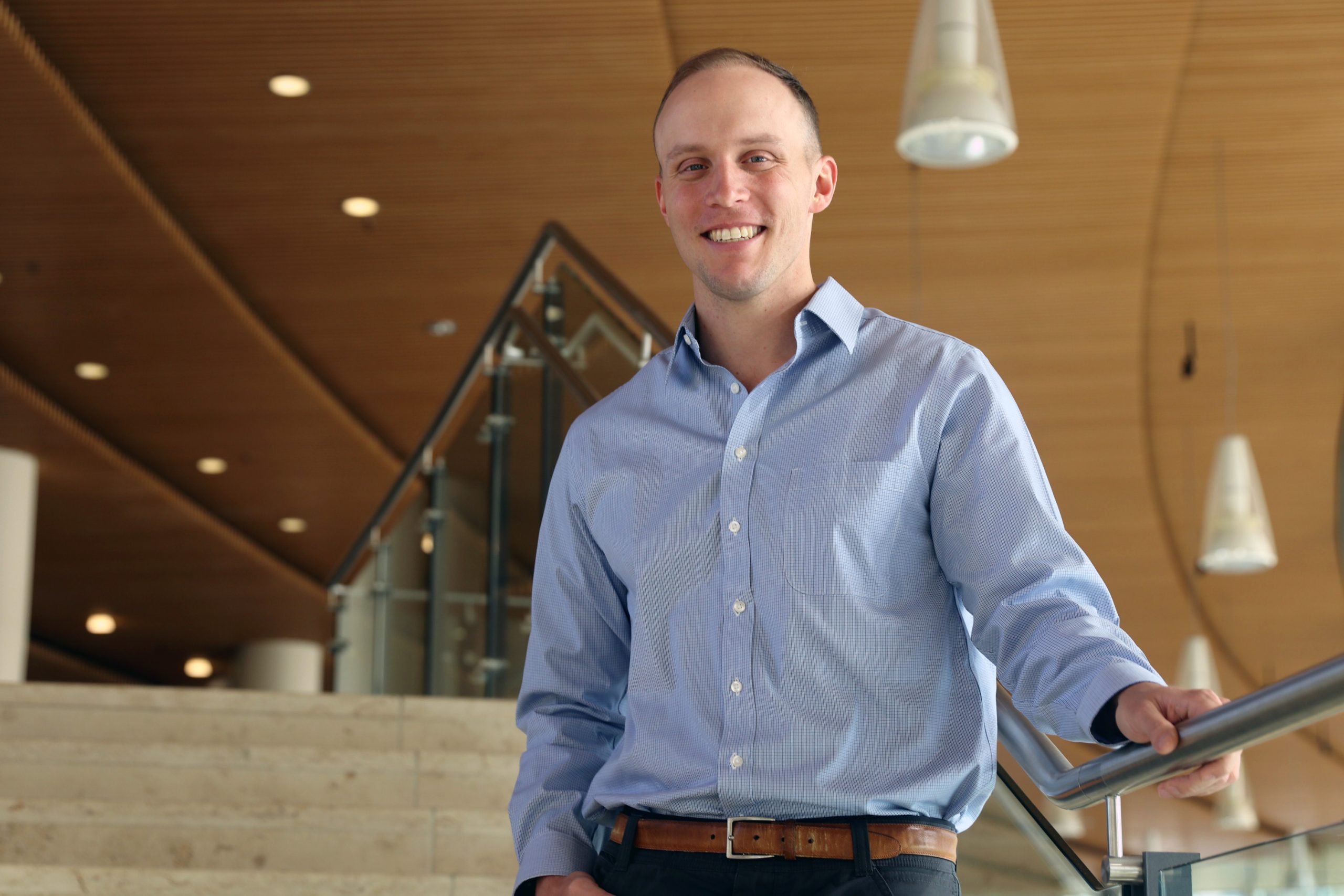
Ben McGrath is a graduate candidate in MIT’s Supply Chain Management Master’s program. Ben graduated with a BS from the United States Naval Academy and recently completed seven years of active duty service. Throughout his career, Ben has deployed to the Arctic, Mediterranean and across the Middle East aboard multiple guided missile destroyers with a focus in operations, engineering, and weapon systems. His career has allowed him to see transportation and shipping on a global scale, including transiting through the Suez Canal and the Bab el Mandeb strait.