
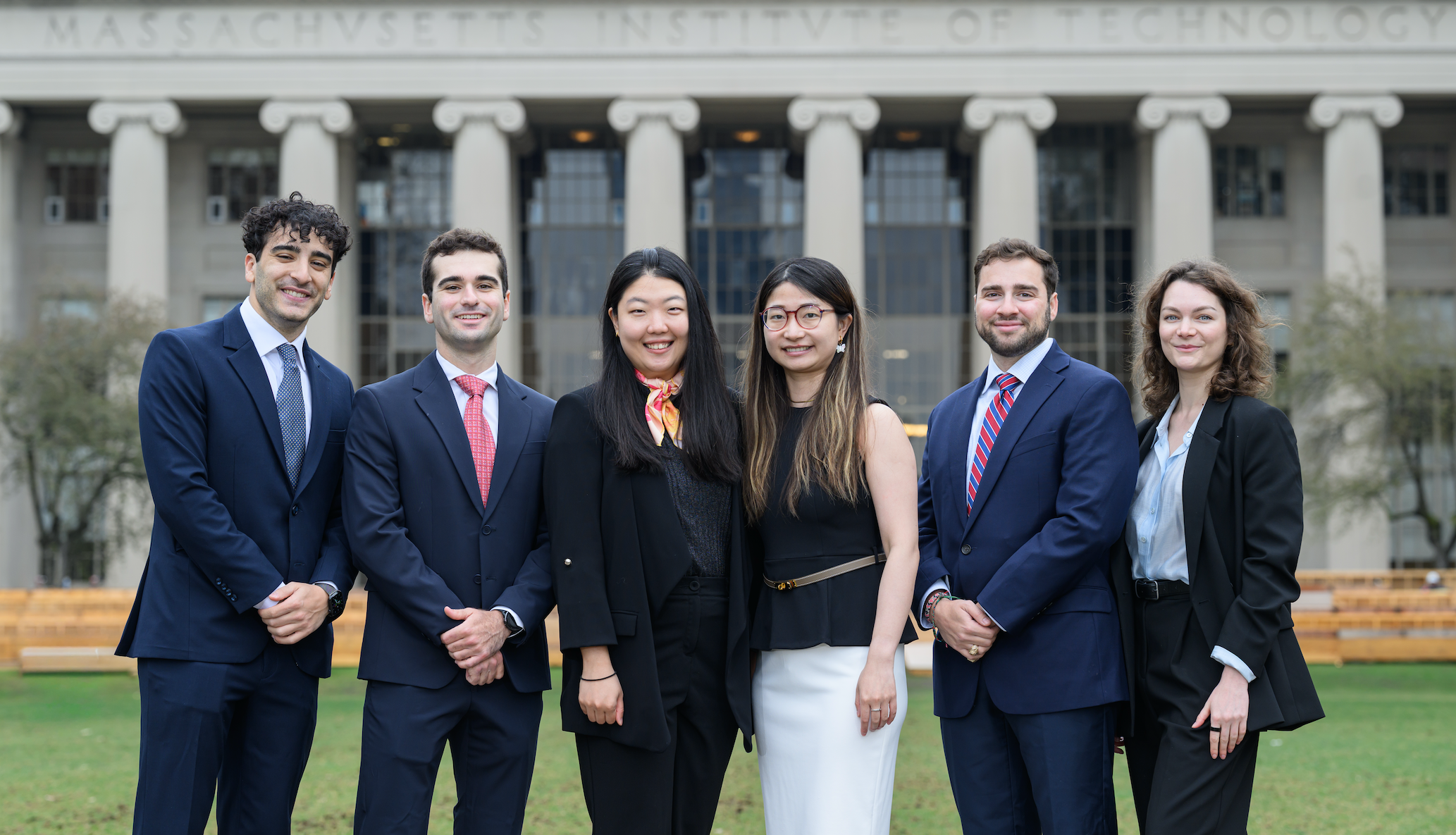
Why partner with MIT?
The MIT Supply Chain Management (SCM) Master’s program offers companies a unique opportunity to invest in their workforce while solving strategic challenges. Whether you’re looking to upskill mid-career professionals, enhance retention, or future-proof your supply chain strategy, partnering with MIT can help you achieve real results.
Request Information
Frequently Asked Questions for Corporate Sponsors
We look forward to working with you! Please reach out to scm-sponsorship@mit.edu to get started.
The MIT SCM Master’s Program is a rigorous, graduate program designed to develop supply chain leaders and innovators. The program equips students with advanced technical and strategic skills to drive organizational efficiency, competitiveness, and growth in supply chain operations and strategy.
Sponsoring an employee offers significant strategic advantages:
- Enhanced leadership capability: Your employee gains advanced knowledge and strategic frameworks applicable to your organization’s supply chain challenges
- Competitive advantage: MIT trained professionals bring cutting edge practices and innovation back to your organization
- Talent retention: Sponsorship demonstrates commitment to employee development and can increase staff retention
- Network access: Your organization gains connections to MIT’s alumni network and peer organizations
Return on investment: Your employee becomes equipped to solve critical business challenges and drive organizational growth
There are two basic types of sponsorship:
- Full Organizational Sponsorship: Your organization covers all tuition and program expenses, and may choose to continue the employee’s salary during the program. Typically includes a post-graduation commitment period to the company
- Partial Organizational Sponsorship: Your organization covers a portion of tuition costs OR holds the employee’s position during their studies. Allows for shared financial responsibility. Typically includes a post-graduation commitment period for the company.
Consider these factors:
- Strategic alignment: Does the employee’s development align with your organization’s growth priorities and supply chain objectives?
- Timing: Will the employee’s new skills address current or anticipated organizational challenges?
- Return on investment: How will the employee’s new capabilities benefit the organization? Can you quantify expected ROI?
- Employee retention: Is this a high-potential employee you want to retain long-term?
- Cost-benefit analysis: Compare the sponsorship investment against the anticipated benefits to your organization
A strong proposal should include:
- Clear articulation of how the program aligns with organizational objectives
- Specific examples of how they will apply program learning to solve business challenges
- Concrete ways they will leverage program resources for organizational benefit
- Realistic timeline for implementing new skills
- Proposed post-graduation commitment period
- Evidence of serious intent and preparation
Post-graduation commitment periods vary by organization and sponsorship level but typically range from 1-3 years. The commitment period should reflect the level of organizational investment and allow time for the employee to implement new skills and drive measurable impact. This is negotiable between your organization and the employee.
Start as early as possible. It’s advantageous to discuss sponsorship before the employee applies to the program. This allows:
- Time for your organization’s decision-making processes
- Opportunity to align program timing with organizational needs
- Ability to structure the sponsorship agreement thoughtfully
- Better planning for the employee’s absence during the program
The MIT SCM program costs can be found here. Reach out to the MIT SCM Program team to discuss costs and sponsorship opportunities. Sponsors have the opportunity of a capstone project (valued at $25,000) as part of their sponsorship commitment.
MIT offers sponsored billing, which allows your organization to be invoiced directly by MIT rather than reimbursing the employee. This is the standard arrangement for corporate sponsorships.
Sponsored billing is a direct payment arrangement where:
- MIT sends an itemized invoice addressed to your organization
- Your organization pays MIT directly (not the student)
- Your organization has 30 days from invoice receipt to submit payment
- MIT applies anticipated credit to the student’s account before payment is received
This arrangement ensures clean financial records and streamlined processing
Yes, if your organization meets these criteria:
- You cover all or most of the student’s tuition and fees
- You plan to send payments directly to MIT
- You require an itemized invoice addressed in your organization’s name
Eligible sponsor types include:
- S. or foreign companies
- S. government departments or agencies (excluding Dept. of Education)
- Foreign embassies
- Pre-paid college plans
That’s possible, but the employee cannot participate in MIT’s sponsored billing system. In this case, the employee becomes responsible for all payments to MIT and must adhere to the Institute’s standard payment due dates. The employee would then submit reimbursement requests to your organization according to your internal policies.
No. Sponsors can only be billed for charges posted to the student’s account in the current term. Additionally, the student’s enrollment may span multiple fiscal years, which can affect your organization’s budget planning. Consider discussing this during negotiation.
Contact MIT Student Financial Services as soon as possible at sfs@mit.edu to discuss payment timeline options. However, be aware that the student may face registration holds, degree holds, or mandatory hold fees if balances remain unpaid after deadlines.
As a sponsor, you must submit:
- Sponsor Billing Authorization Form
- Sponsored Billing Requirements documentation
- These forms authorize MIT to invoice your organization and outline billing specifics.
Submit documentation before the term begins:
- Fall term: by October 1
- Spring term: by March 1
- Important: Late submissions may jeopardize the sponsored billing arrangement. Coordinate with your employee to ensure timely submission.
Submit to:
Massachusetts Institute of Technology
Attn: Student Financial Services
77 Massachusetts Avenue, Building E17-294
Cambridge, MA 02139-4307
Or by email to: sfs@mit.edu
Yes. Once your Sponsor Billing Authorization Form is approved, MIT will send itemized invoices addressed to your organization, detailing all tuition, fees, and other charges covered by the sponsorship.
General sponsored billing inquiries: Student Financial Services at sfs@mit.edu
MIT SCM Program Contact: scm-sponsorship@mit.edu
The SCM residential program is two academic semesters, or 10 months – August to May. The on campus portion of the SCM blended program is one academic semester, plus the month of January, or 5 months – January to May.
Yes. Many organizations sponsor multiple employees in MIT programs. Each sponsorship follows the same administrative process, and each employee must submit their own Student Acknowledgment Form and complete the required documentation.
Approach it as a business partnership negotiation:
- Understand their priorities: Why do they want this program? How will it benefit them?
- Clarify your expectations: What specific value do you expect from their participation?
- Discuss commitment: What post-graduation commitment period is reasonable given your investment?
- Address timing: When should they start? How will their absence impact your operations?
- Document everything: Put the final agreement in writing, including all terms and conditions
A comprehensive sponsorship agreement should specify:
- Sponsorship level (full, partial, or specific dollar amount)
- What costs are covered (tuition, fees, materials, etc.)
- Payment mechanism (sponsored billing vs. reimbursement)
- Post-graduation commitment period and terms
- Consequences if the employee leaves before the commitment period ends
- How to handle scenarios where the employee cannot complete the program
- Confidentiality or intellectual property provisions, if applicable
- Dispute resolution process
Yes. Many organizations successfully negotiate:
- Partial sponsorship: Covering a percentage of tuition while the employee contributes
- Time-based sponsorship: Holding the position while the employee attends but not funding tuition
- Phased sponsorship: Spreading payments across fiscal years
- Conditional sponsorship: Funding contingent on academic performance or completion