“Two roads diverged in a wood, and I—
I took the one less traveled by,
And that has made all the difference.“
When people think about supply chain, they don’t usually think about music. But to me, they are inseparable.
I love singing. To me, supply chain feels like music. Each function is like a different vocal part. Procurement is the steady bass line. Production planning carries the melody. Logistics enters with timing and precision. Finance holds the rhythm. Alone, each part is meaningful. Together, when harmonized, they create something powerful.
That’s what a well-designed supply chain feels like: complex parts aligned in perfect timing.
I didn’t begin my career in supply chain. I earned a BBA at National Chengchi University with a focus in marketing and spent my early professional years moving across India, China, and the United States in business control and overseas business development roles. At the time, I didn’t see a pattern forming. I was simply collecting experiences.
But looking back, I was learning how individual components work before understanding how to orchestrate them.
As a controller in India, I realized that financial statements were not just numbers; they were reflections of operational decisions. Inventory levels told stories. Cash flow revealed coordination. In business development, every quotation required anticipating production constraints, trade regulations, and logistics realities. I enjoyed the strategy, but I often felt like I was hearing only parts of a song without understanding the full arrangement.
The moment where everything clicked came unexpectedly.
In early 2022, Adele canceled her Las Vegas residency just 24 hours before opening night due to supply chain disruptions. I was stunned. How could a world-class production stop at the final moment?
A year later, I attended opening night of Taylor Swift’s The Eras Tour in Phoenix, Arizona. While everyone around me was immersed in the music, I found myself captivated by the invisible system behind it: staging, lighting rigs, speakers, costumes, and mountains of merchandise. There was no margin for delay. Forecasting had to be accurate. Transportation had to be flawless. Timing had to be exact.
It felt like watching the largest supply chain symphony in the world.
That was when I fully understood: supply chain is the silent force that makes extraordinary experiences possible.
This realization pushed me to make a change. During COVID, semiconductor shortages had paralyzed industries worldwide. Cars sat unfinished. Electronics were delayed. Entire production lines stalled. The semiconductor industry was not just complex; it was foundational. If I wanted to understand supply chains at the highest level of technical precision and global interdependence, this was the stage.
So I stepped onto it.
I became the first and only person in a newly formed supply chain function for a semiconductor project in Phoenix. There was no predecessor and no playbook. I had to build purchasing and logistics structures from scratch. Suppliers became my teachers. Every negotiation was rehearsal. Every disruption was live performance.
And like music, execution mattered as much as design.
But in 2023, I hit a dissonant note. I felt overwhelmed and questioned whether I belonged in such a technical field. A mentor advised me to reconnect with something that energized me. For me, that has always been learning.
That search for learning led me to the MITxMicroMasters in Supply Chain Management program.
For 18 months, I studied analytics, optimization, and machine learning at night while working full time during the day. What I learned on Sunday, I applied on Monday. I stopped speaking about problems intuitively and began quantifying trade-offs with data. I could explain risk, timing, and variability with precision. My confidence grew. I was promoted twice.
Eventually, I joined TransPak Inc., where I now lead logistics systems initiatives and implement supply chain solutions end-to-end. My company saw the impact of my MIT education and chose to sponsor my master’s degree.
Yet the most meaningful moment for me at MIT wasn’t in a classroom.
It was standing beneath the Great Dome, singing with Asymptones, an MIT a cappella group. When multiple voices blend under that echo, something magical happens. Each voice alone is imperfect. Together, they create harmony. Timing matters. Listening matters. Anticipation matters.
That is supply chain.
Studying supply chain management may seem like the road less traveled for someone with a creative background in marketing and music. But it made all the difference in my career trajectory. My lifelong love of harmony, rhythm, and coordination prepared me for this field more than I realized. Music trained me to listen for imbalance. To anticipate transitions. To understand that the beauty of a performance depends on invisible structure.
Supply chain is not just about moving goods. It is about conducting complexity.
Looking back, my journey was never linear. It was compositional. Individual experiences, such as finance, business development, global relocation, semiconductor operations, analytics, were like separate vocal tracks. Only later did I learn how to arrange them.
If there is one lesson from my path, it is this: your background does not limit you. It equips you. The skills you develop in one domain may become your greatest advantage in another.
Sometimes the most unconventional path creates the most powerful harmony.
And that has made all the difference.
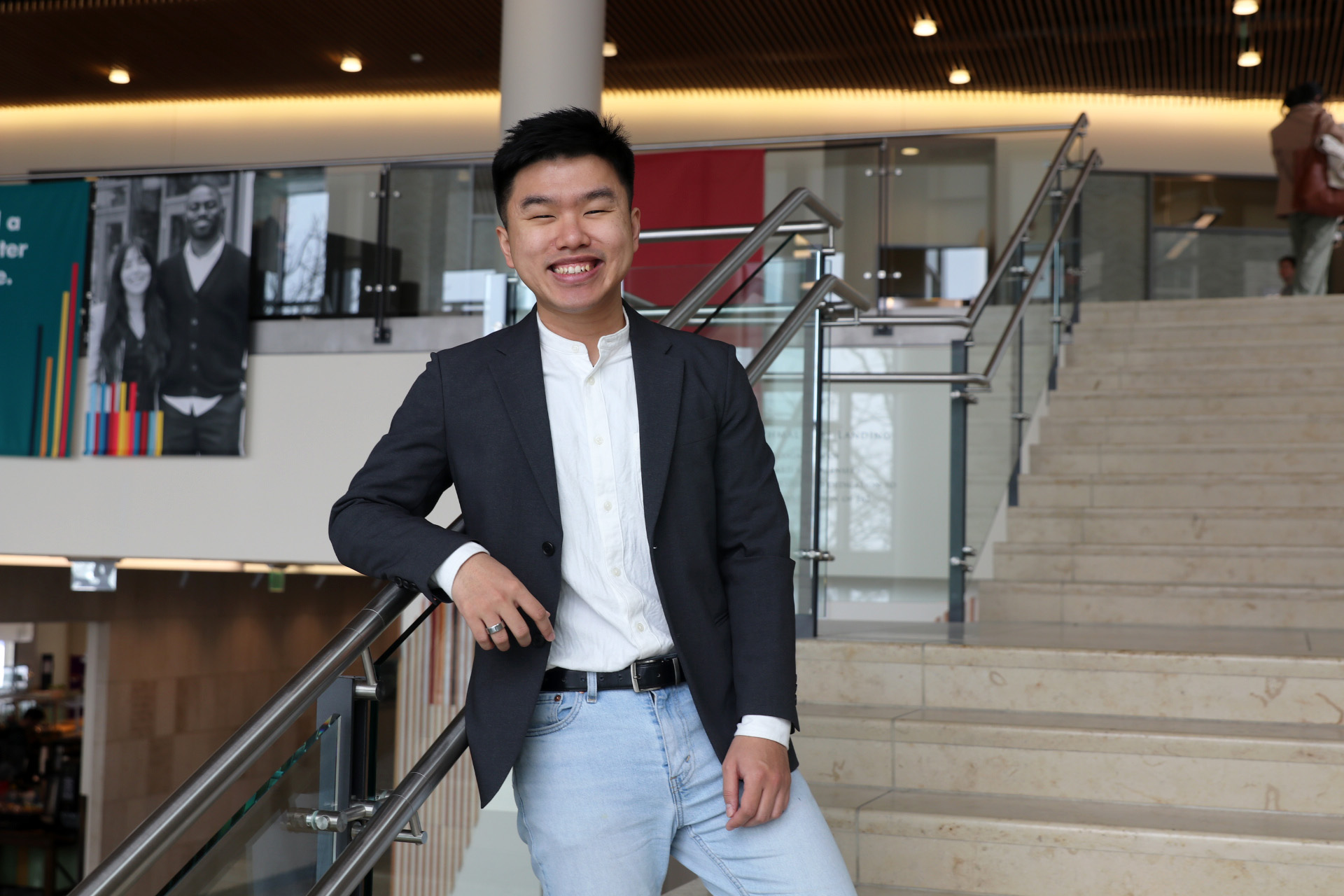
Ian Wong is a graduate candidate in MIT’s Supply Chain Management Master’s program. A true global citizen, Ian has studied and worked across Taiwan, Singapore, China, Norway, India, and the United States. His international journey has instilled in him a deep appreciation for diversity and adaptability, shaping a transparent and collaborative working style. Ian prides himself on being a dynamic leader for global teams and a creative problem-solver who continually seeks strategic and analytical approaches to drive project success. With a keen focus on digital transformation and AI applications in supply chain management, he is committed to leveraging cutting-edge technologies to optimize and innovate within the industry.