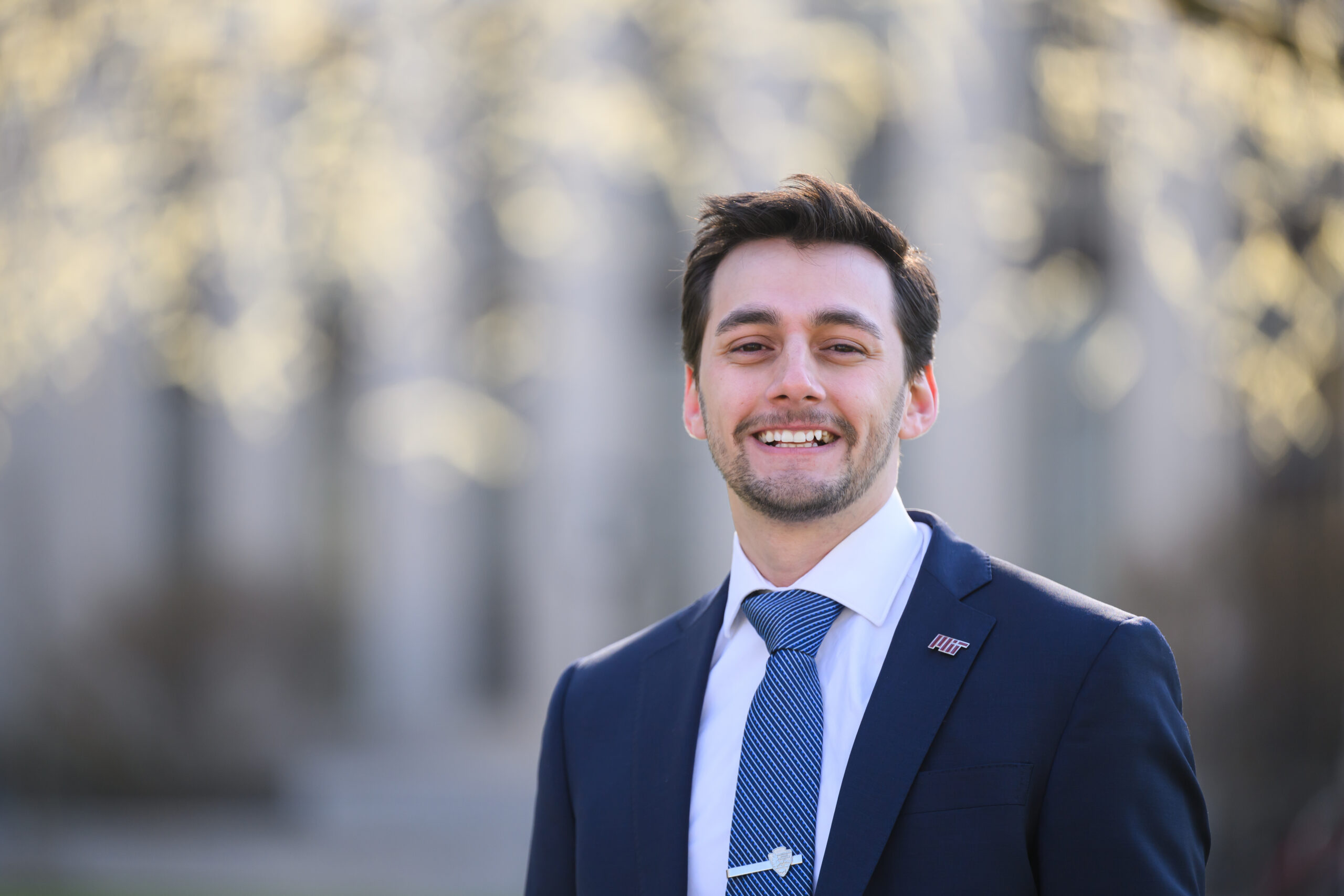
Jesse Brouillette’s path into MIT’s Supply Chain Management (SCM) Master’s program was driven by a clear goal: to build a career at the intersection of healthcare and supply chain. After studying business and logistics at Cal State Long Beach and moving into healthcare analytics and hospital supply chain systems, he knew the next step had to expand both his expertise and long-term possibilities.
MIT had been on Jesse’s radar for years, starting with the Supply Chain Analytics (SC0x) MicroMasters course he had completed while working full-time. At MIT, the real difference was the people—classmates who became a genuine support network, alongside engaged faculty and hands-on learning. Today, Jesse is a healthcare IT and supply chain consultant at Alvarez & Marsal, applying that MIT-shaped perspective to help hospitals solve complex operational challenges.
Can you share your background and what led you to MIT?
I started my undergraduate experience at Cal State Long Beach, where I studied business management and supply chain operations. During undergrad, I worked at the Center for International Trade and Transportation, which was really my first hands-on exposure to the logistics field through transportation research in partnership with Cal State Long Beach and USC.
After I graduated, I joined Family Choice Medical Group as a data analyst, which was my introduction to healthcare. I supported their ACO and CCM programs and ended up wearing a lot of hats, which helped grow my interest in both healthcare and supply chain. After about a year, I moved to Boston—I’m originally from Massachusetts—and I joined Boston Children’s Hospital as a supply chain information systems specialist, where I spent about three and a half years.
Even with a promotion, I found myself doing similar work and started thinking seriously about a Master’s program. I also considered MPH programs because I knew I wanted to stay at the intersection of supply chain and healthcare, but MIT’s Supply Chain program was the only supply chain program I applied to—and I knew if I got in, that’s where I would go.
How did you find out about the MIT program and what made you choose it over other schools?
MIT’s program had been on my radar for a long time, especially because of the MicroMasters pathway. After I finished undergrad in 2020, during the early period of COVID, I took the Supply Chain Analytics Course (SC0x) as a way to continue learning while working full-time. The course remained valid for several years, and later I was able to use that completion as part of my MIT application. Over time, I kept up with what the program was doing—following the courses and staying connected online—and that consistency reinforced for me that it was a strong fit.
What was your favorite part about the Supply Chain Management program?
My favorite part of MIT was the people—my classmates, especially. They became close friends and a real support system, whether that was studying, preparing for interviews, or just learning from each other’s experiences. In a lot of ways, my classmates became “career advisors” too, because there was so much shared context and overlap in what we were trying to achieve. I also really valued the experiential learning; for example, in the SCM track we did a study experience where we were able to go to Panama, and that was definitely a highlight for me.
What was the most surprising part of the program?
What surprised me most was how engaged and accessible the faculty and staff were. Professors were genuinely invested in whether students understood the learning outcomes, and I felt like if I put in the effort and asked for help when I needed it, they were willing to spend the time—whether that was working through challenging material, offering different ways to prepare, or helping you get unstuck.
What type of person would you recommend for the program and why?
I don’t think there’s one specific “type” of person who should apply, because the program is diverse, and people come from a wide range of backgrounds—that’s part of what makes it great. If I had to name a quality that matters most, it’s being intentional. I think the strongest candidates are people who are ready to do something different for a year, grow professionally, and be clear about what they want out of a specialized Master’s degree. I know a lot of people consider MBAs, and I was also considering an MPH, but for me it came down to choosing the specialized path that best matched what I wanted to do next.
I think the strongest candidates are people who are ready to do something different for a year, grow professionally, and be clear about what they want out of a specialized Master’s degree.
What made you decide to do consulting following graduation, and how did the program support this change?
I knew even before I started at MIT that I wanted to transition into consulting, and I began networking early. The career advisors make it very clear that networking is a big part of landing the right role after the program, and I think it helps a lot if you already have a direction in mind. I wanted consulting because it felt like a way to gain broader experience and work on different types of challenges over shorter timeframes without having to constantly jump between employers. After I graduated, I joined Alvarez & Marsal (A&M), and I’ve been enjoying the start of my career in consulting. I’m in the healthcare division, and I get staffed on IT and supply chain workstreams for different hospitals.
How does the Master’s program help with networking? Were the opportunities global?
To me, the opportunities were definitely across the country. It’s largely what you make of it, and the career advisors are great at working with you based on what you want. I had classmates who ended up all over the U.S. and around the world. Personally, I maintained networks in both Massachusetts and California, since I’d lived in both places. I also ended up at a firm where I can live anywhere in the U.S., which feels like a big advantage compared to other roles I’ve had, and it just happened to work out that way.
Overall, I’ve found the career advisors and the supply chain alumni network are genuinely there to help you get what you want out of the program, and I’ve seen that play out for my classmates, too.
How does what you learned in the program help you in your day-to-day work?
What I take from MIT most isn’t one specific hard skill—it’s more the mindset. In my current role as a healthcare IT and supply chain consultant, I haven’t directly used certain technical pieces from coursework, like doing network design in Python. But I do rely on a more holistic way of thinking about problems: not just looking at the data, but thinking through how the work will be used by different levels of an organization. I also think the professional development around interviewing, connecting with alumni, and learning how to show up in professional settings mattered a lot. At the end of the day, your interactions with people often matter as much as the work itself.
How would you describe the value of the alumni network?
I see the alumni network adding value at a couple of different levels. One is built into the program: alumni come back, visit classes, share their time in meetings, and in some cases, help teach or contribute to coursework. The other part is what you make of it personally.
From my experience, alumni are generous with their time and willing to have conversations, offer advice, and help you think through your job search and career path. Even when they can’t point you to a specific opening, they’ll often make introductions through their networks. Reaching out can feel intimidating at first, but once you start the conversation, it feels much more natural—most people remember being in your position and want to help.
In a sentence or two, what is the biggest value of the program?
When I went into a Master’s program at MIT, I expected the name recognition, and I expected to be challenged academically—and that’s true. But the biggest value for me was still the people, especially my classmates.
There were times when I spent as much time with classmates outside of class as I did in class—working in breakout rooms, practicing case interviews, and preparing together. That collaboration added a lot. I also really valued the career advising support. Career advisors would bring companies in to recruit and present opportunities, and if the companies coming in aren’t aligned with what you want, they’ll help you navigate the alumni network and build a path toward the outcomes you’re aiming for.
What is your long-term vision for your career?
I try to take my career one step at a time, the same way I have so far—from undergrad to a data analyst role, then into Boston Children’s, then MIT, and now consulting. I want to keep progressing professionally, do the best I can in the roles I’m in, and see where that takes me. I can absolutely see a future where I stay in consulting for a long time, but I could also see myself going back into the industry with a hospital at some point. I’ve been at Alvarez & Marsal since around the end of June 2025, and I’m really enjoying the role and the teams I’m working with, so my plan is to stay here for at least the near future.
Transform Your Career at MIT
If you’re inspired by Jesse's experience and curious about what the program could do for your career, we’d love to hear from you! Learn more about the MIT Supply Chain Management Master's Program below.
Learn More