“Where are you from?”
It’s a simple question I’ve never been able to answer in one sentence. I grew up in China, where I completed my undergraduate studies in finance, then moved to Europe for a master’s in finance and spent nearly a decade working across operations and supply chains. But geography doesn’t fully capture it. What I’ve really been doing, without fully realizing it, is learning how to connect worlds that don’t naturally speak to each other.
In many ways, that is what supply chains do. They connect different realities, across countries, functions, and priorities, and turn them into something that works. And the longer I’ve worked in this field, the more I’ve come to see my own path and the discipline itself as reflections of the same underlying idea: that the most valuable work happens not within systems, but between them.
A conversation with a professor at Harvard Kennedy School this semester introduced me to a distinction that reframed how I think about my own career: the difference between deliberate strategy – carefully planned and executed with intention—and emergent strategy – shaped through action, adaptation, and learning along the way. For a long time, I assumed a strong career needed to follow the first path. But looking back, mine has clearly been the second. From finance to operations to broader supply chain, from China to Europe to the U.S, none of it was pre-designed. It unfolded through context, decisions, and what each step made possible.
Supply chains work the same way. No supply chain unfolds exactly as planned. Forecasts shift. Suppliers fail. Disruptions happen. The ability to adapt and respond to what is actually happening rather than what was expected is not a weakness. It is the system. And once I saw that parallel, I started to understand both my career and my discipline differently.
The moment this clicked for me was at Cargill, where I spent years working across agricultural supply chains in Europe. I observed examples like commercial teams source lower-quality soybeans because it improved trading margins, while manufacturing burden the cost of harder, more expensive processing downstream. Each function was optimizing its own KPI. Each was rational in isolation. And collectively, they could be working against the system’s actual purpose. Over time, I learned: when you optimize for a single function, you miss the flow. The hardest problems in supply chains are rarely technical. They are problems of alignment between teams, between incentives, between ways of seeing the world. And the people who solve them are the ones who can see across boundaries.
That tension between local optimization and system-level coherence doesn’t just play out inside companies. It is now reshaping the architecture of global supply chains themselves.
Tariffs, geopolitical tensions, and the push for resilience are driving what the World Economic Forum calls “reglobalization”: not the end of global trade, but a fundamental redesign of its structure. Supply chains built on cost-optimized, single-source global networks are giving way to regionally diversified, resilience-based systems. According to Accenture, 85% of companies plan to manufacture and sell within the same region by 2026, up from 43% today. The logic that once made “global” synonymous with “supply chain” is being rewritten in real time.
Having lived across three continents, this shift feels deeply familiar to me. Different regions don’t just operate differently. They optimize for different things under different systems and cultures. Some systems prioritize efficiency; others value resilience or speed. None are inherently right or wrong. But when they intersect inside a global supply chain, the friction becomes real. I’ve felt that friction firsthand, navigating between the more structured, process-driven way of working in Europe and the speed-first, problem-solving mindset I experienced in Asian markets. And what I’ve learned is that the future doesn’t belong to purely global or purely local supply chains. It belongs to systems that combine a global perspective with local execution, shaped by people who have operated across those worlds and understand the trade-offs viscerally, not just analytically.
In a world where the Suez Canal blockage halted global trade overnight, the war in Ukraine reshaped energy and grain supply chains across continents, conflicts in the Middle East continue to disrupt shipping routes, and U.S.-China tensions are forcing companies to redraw their sourcing maps entirely, one question keeps coming back to me:
What endures? Amid all this disruption and transformation, what actually stays true?
I believe it comes down to three things. Systems thinking: the ability to see across functions, incentives, and trade-offs rather than optimizing a single node. Judgment under uncertainty: because no model captures everything, and the ability to connect dots, read context, and make decisions when the data is incomplete will always be irreplaceable. And the capacity to bridge: between cultures, between strategy and execution, between what the technology can do and what the organization is ready for. These are not new skills. But in the world that is emerging, they matter more than ever.
Looking back, my journey feels less like a straight line and more like a system gradually taking shape. Different geographies gave me different lenses. Different roles gave me different ways of understanding value. MIT gave me the space and the tools to connect them. Somewhere along the way, what once felt fragmented started to make sense. Not because everything was planned, but because each step was a response to context, an adaptation. Emergent strategy, in action.
So…where am I from?
I’m from the space between systems. I’m committed to building a future where supply chains, powered by AI and technologies evolving so fast they are opening possibilities in ways we never imagined, are not only efficient, but also adaptable, resilient, and fundamentally human-centered. That’s the work ahead. And I’m excited to shape it alongside the brilliant people I’ve met on this journey.
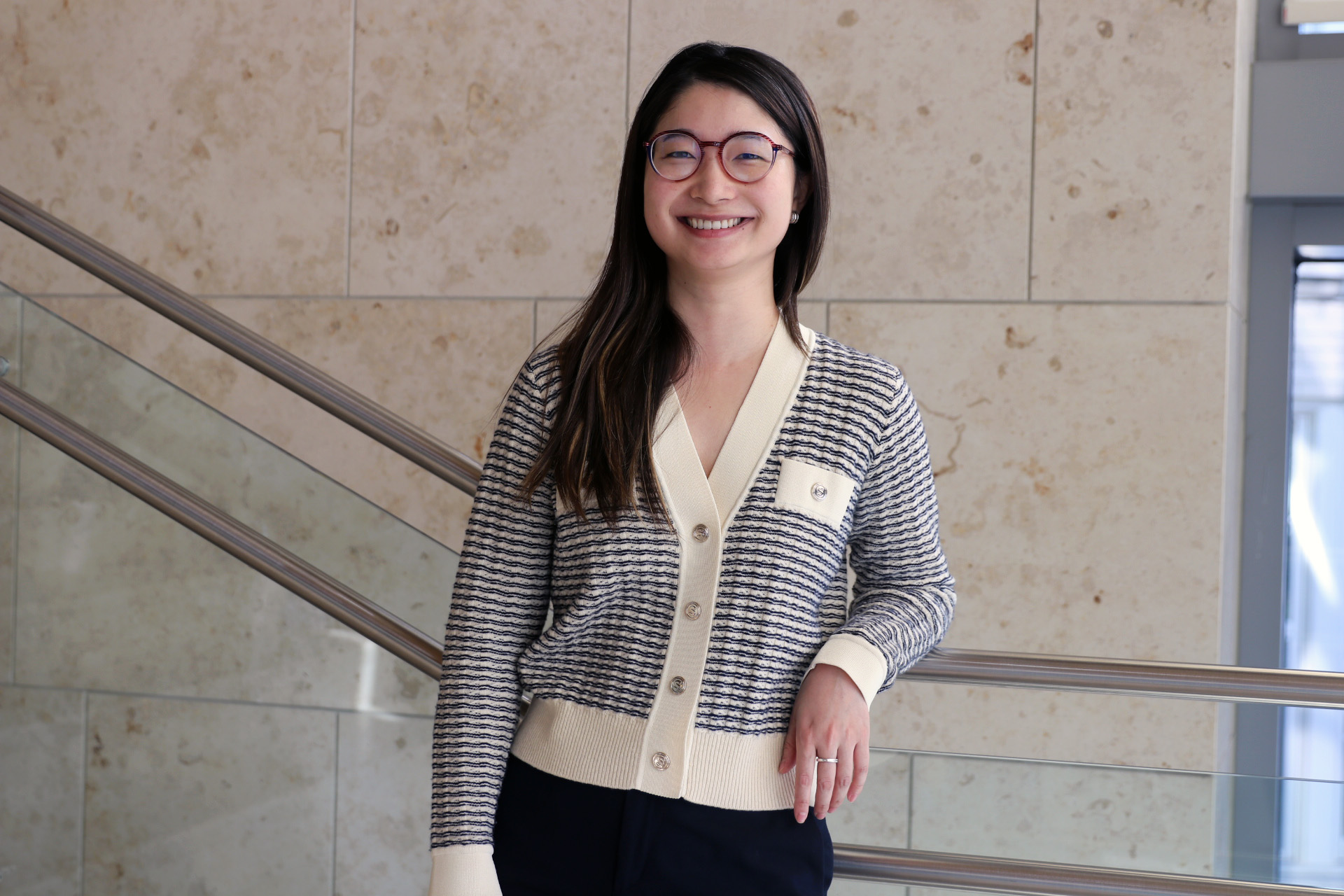
Jing Liu is a graduate candidate in MIT’s Supply Chain Management Master’s program. Jing started her career with a strong foundation in finance, completing both her bachelor’s and master’s studies in finance and investments, before moving into operational excellence and supply chain transformation roles in a global agribusiness. Over the past nine years, Jing has led cross-functional muti-country initiatives and programs across manufacturing, supply chain, and cost productivity throughout the EMEA region.