Menu
  • SCM Voices Blog
  • News and Events
  • Corporate Engagement
Apply Now
Search

At the MIT Center for Transportation & Logistics

  • Admissions
  • Directory
  • Education
  • Employment Outcomes
  • Experiential Learning
  • Student Experience
  • Search
  • Alumni Spotlight: Olivia Morton ’25

    April 23, 2026

    Olivia Morton’s path to MIT’s Supply Chain Management (SCM) Master’s program didn’t start in a warehouse or an operations center—it started outdoors, in the natural sciences, and in global service. Raised in Charleston, South Carolina, Olivia studied biology at UNC Chapel Hill, then served in the United States Peace Corps in Ethiopia, where her interest in food systems, agriculture, and real-world problem solving deepened.

    After earning a Master’s in Environmental Management from Duke University and building early career experience in renewables, consulting, and food & beverage, Olivia joined Golden State Foods (GSF) helping lead sustainability efforts, then transitioning into sourcing work. That sourcing role ultimately connected her to the MIT SCM program, helping her bridge her science background with supply chain strategy and execution.

    Today, Olivia is back at GSF as Director of Material Resource Planning, a role created to fill a critical gap across business units—one she was uniquely prepared to step into after MIT.
     

    Can you share your background and what led you to MIT?

    Before MIT, my academic and professional background was largely rooted in science and sustainability. I started in biology at UNC Chapel Hill, then served in the Peace Corps in Ethiopia, and later pursued Duke’s environmental management program to deepen my focus on how business decisions intersect with environmental outcomes. As my career progressed, I realized I wanted stronger supply chain fundamentals to match the work I was being pulled into, especially as my responsibilities shifted from sustainability into sourcing and packaging.
     
    How did you find out about the MIT SCM program and what made you choose it?

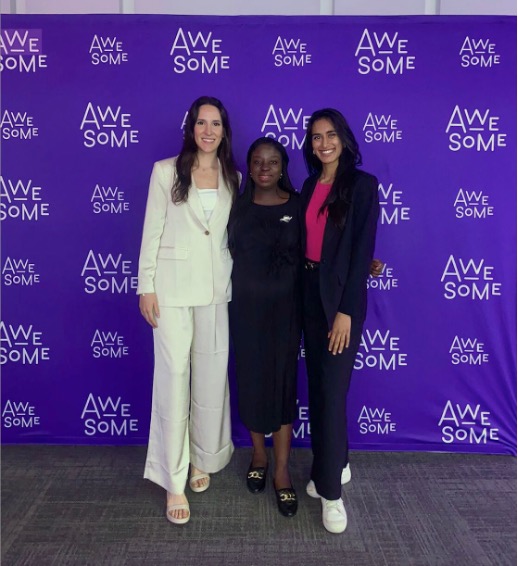
    I actually already had a master’s degree when I found out about MIT. At the time, I was working in sourcing at GSF, and my role was tied to identifying packaging alternatives to reduce single-use plastics. My mentor and manager nominated me for the MIT Advancing Women Through Education (AWE) Fellowship, and that’s what introduced me to the MIT SCM pathway. It was a bit serendipitous—I didn’t initially think I’d be applying for another master’s program. I started taking courses through the MicroMasters, and that quickly turned into a clear opportunity to bridge my natural science background with sourcing and supply chain in a deeper, more technical way.
     
    What was your favorite part of the program?

    My favorite part was the people, and truly, it felt like there wasn’t a single bad egg. The cohort felt like a home away from home. Having such an international group also meant I learned ten times more than I would have otherwise. A fun personal anecdote: I showed up at MIT pregnant with my first child, and nobody knew it at first. The experience still felt like this incredible embrace—not just academically, but personally as well.

    From an academic standpoint, I also loved the breadth and depth of classes. I took courses in supply chain and in management, and that helped broaden my expertise. I came back to school knowing there were skill sets I was missing, and I was able to jump into areas where I had no prior background.
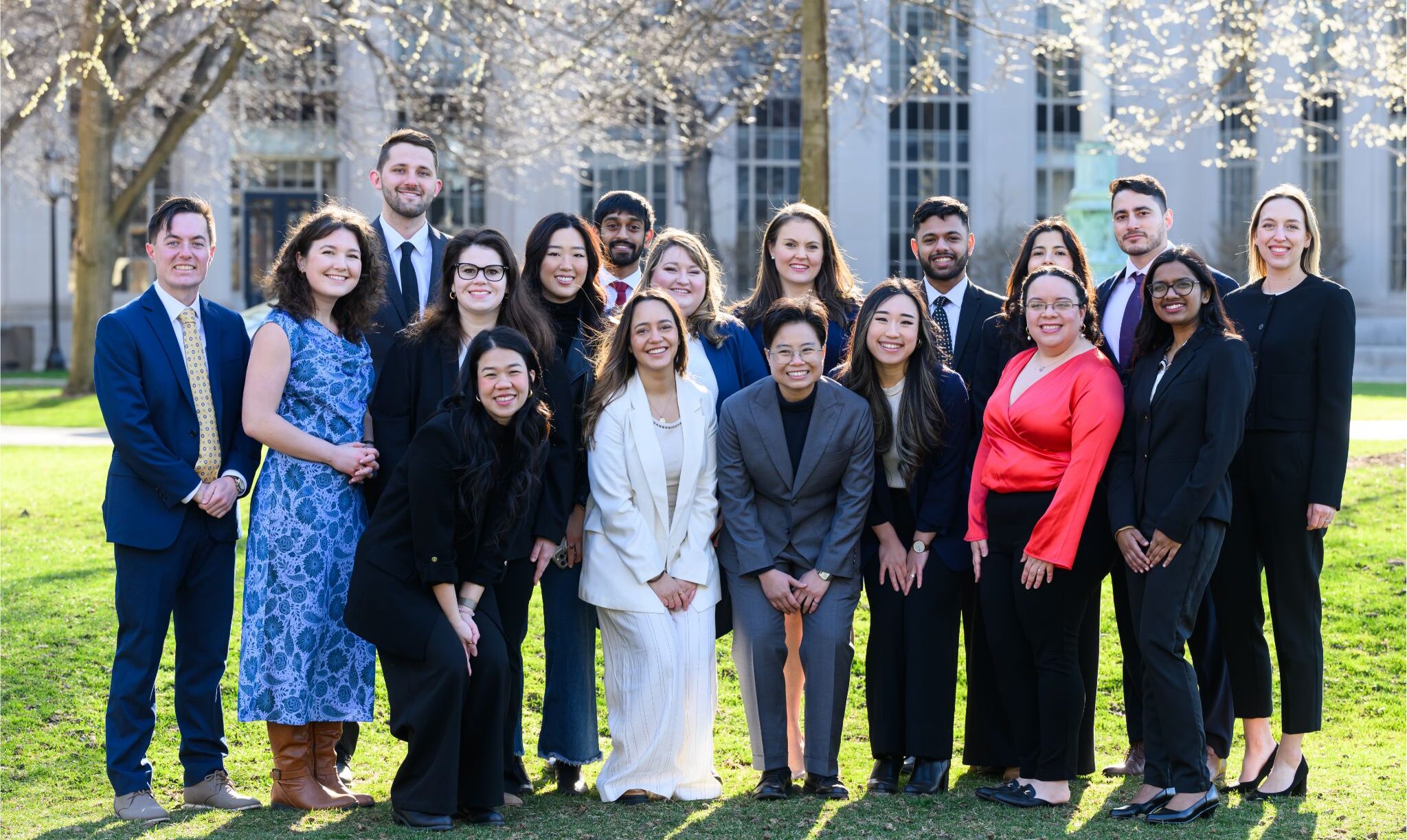
    Posing with classmates in front of the iconic Killian Court dome
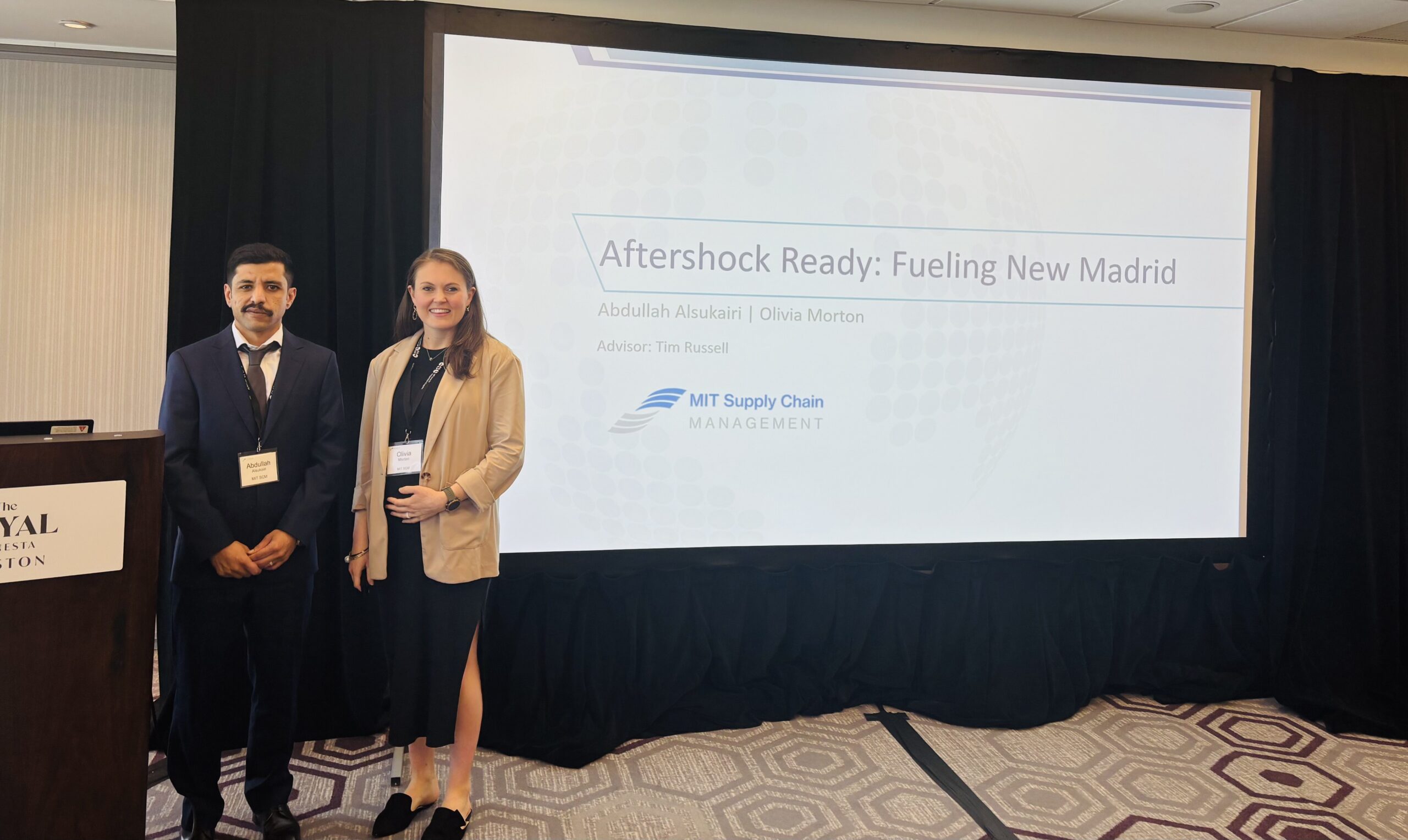
    Presenting at the SCM Capstone Symposium with her capstone partner, Abdullah
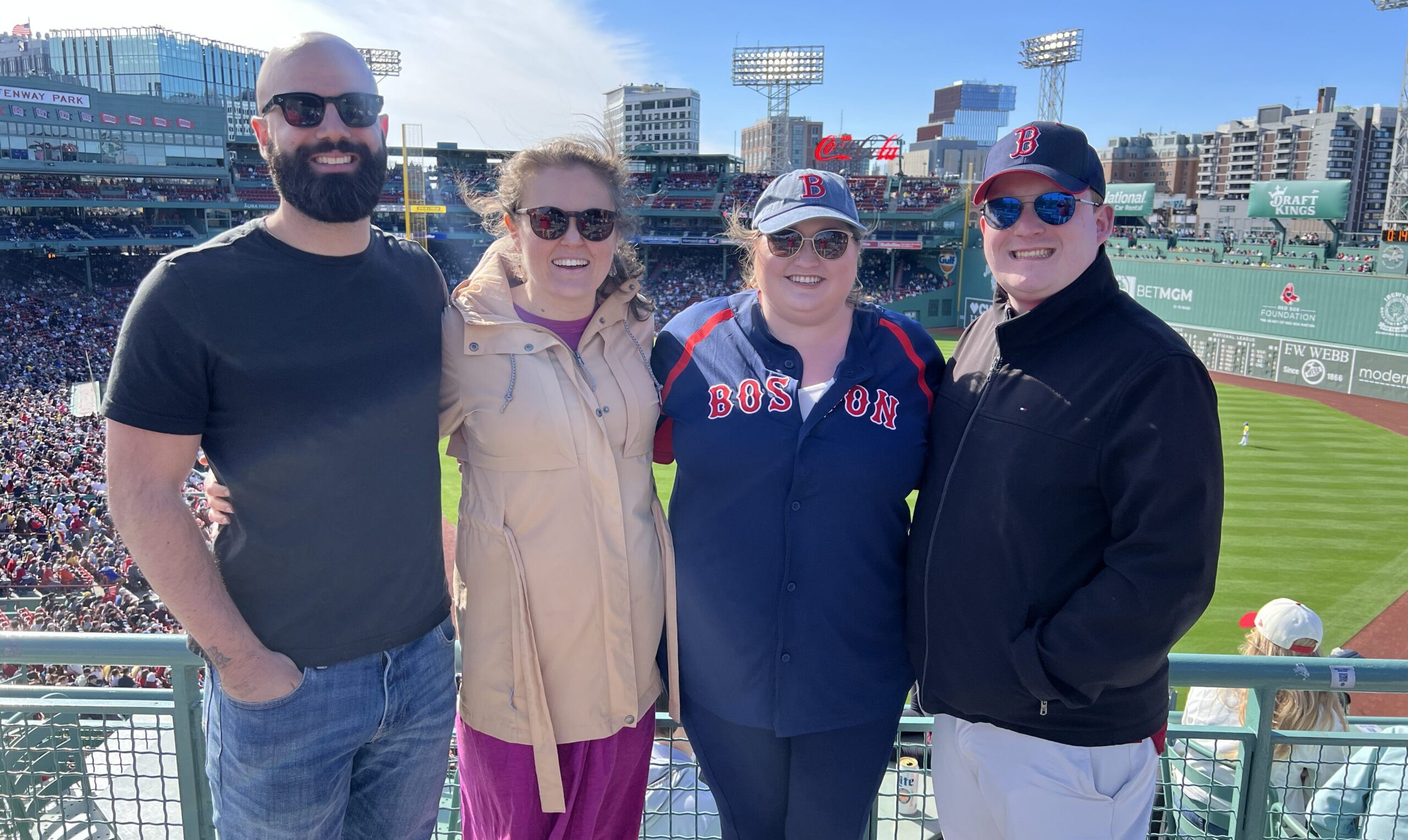
    Enjoying a windy Red Sox game at Fenway Park

    What surprised you most about the program?

    What surprised me most was the level of global industry exposure. The SCALE program experience in January was exceptional. It helped me dive deeper into my capstone work, and I was exposed to other departments and supply chain labs in a way that made the overall experience feel very thorough and immersive.
     
    What type of person would you recommend for the program?

    Many of the usual qualities—drive, determination, intelligence—certainly matter, but what truly sets students in this program apart is their curiosity and adaptability. I’d advise approaching it with an open mind rather than trying to plan everything perfectly. The classes I took and the work I ended up doing were often different from what I expected—but that’s exactly what made the experience so rewarding.

    I’d also highlight the importance of being a strong team player, since collaboration is at the heart of much of the work. This spirit of teamwork extends beyond the program itself, reaching across different schools and even industries. 
     
    Did you return to your employer after graduation?

    Yes. After I graduated in May 2025, I returned to GSF. I transitioned from managing our global packaging sourcing to becoming the Director of Material Resource Planning on our supply chain team. While I was at MIT, we knew there was a chance I’d switch from sourcing to supply chain—we just didn’t know what role it would be. This role was created because we identified a gap in processes and systems across business units, and I had a unique skill set coming out of the SCM program that matched what we needed.
    I knew going into MIT that I wanted to return to my employer. They were incredibly supportive of my development, so I didn’t actively pursue other job searches. That said, I did stay involved—I helped with career-related activities and served as an admissions ambassador, so I was still connected to the broader ecosystem of roles and pathways students were pursuing.

    My role was created because we identified a gap in processes and systems across business units, and I had a unique skill set coming out of the SCM program that matched what we needed.”

    How did the program prepare you for your current role?

    The program absolutely helped me step into my new role. I can confidently say I have the educational foundation and skill set that helped fill a gap in our internal supply chain knowledge. My current work centers on master resource planning, ERP deployment, inventory, and demand planning. The MicroMasters set the foundation across the discipline, and then I strategically chose courses that would translate directly into my responsibilities.

    One of the most impactful courses I took was actually managerial finance. Coming from a non-finance background, I quickly realized how essential it is to understand how to “communicate through currency.” Financial fluency is critical for executive-level decision-making, and the course gave me the confidence to engage in those conversations with clarity and credibility. Beyond finance, I gained invaluable skills through coursework in inventory modeling, data analytics, Python, and emerging AI trends. Together, the coursework and experiences in the program not only strengthened my technical foundation but also expanded the way I approach complex business challenges.

    How do you describe the value of the network?

    The alumni network is invaluable. Even though I didn’t need it to leverage my current position, the opportunities to connect, learn, and continue building relationships are incredible. I also think about the AWE Fellowship network—there’s a strong cohort of women connected through that community, which is exciting. As my career progresses, I know I’ll continue to benefit from the relationships in my blended cohort, the broader residential cohort, and the alumni network beyond that.
     
    In a sentence or two, what is the biggest value of the program?

    In my opinion, the biggest value is being exposed to the latest innovation and technology, because what you’re learning today can change tomorrow. Having access to global perspectives on technology, innovation, people, and processes is invaluable.
     
    What is your long-term vision for your career?

    My long-term vision changes all the time—but that’s part of the point. I didn’t know what I didn’t know before MIT. I started out in natural sciences and environmental management, then worked through sustainability and sourcing with an environmental lens. Now, my career is growing in a supply chain direction I wouldn’t have imagined before, and MIT gave me the education and exposure to explore that new path with confidence.
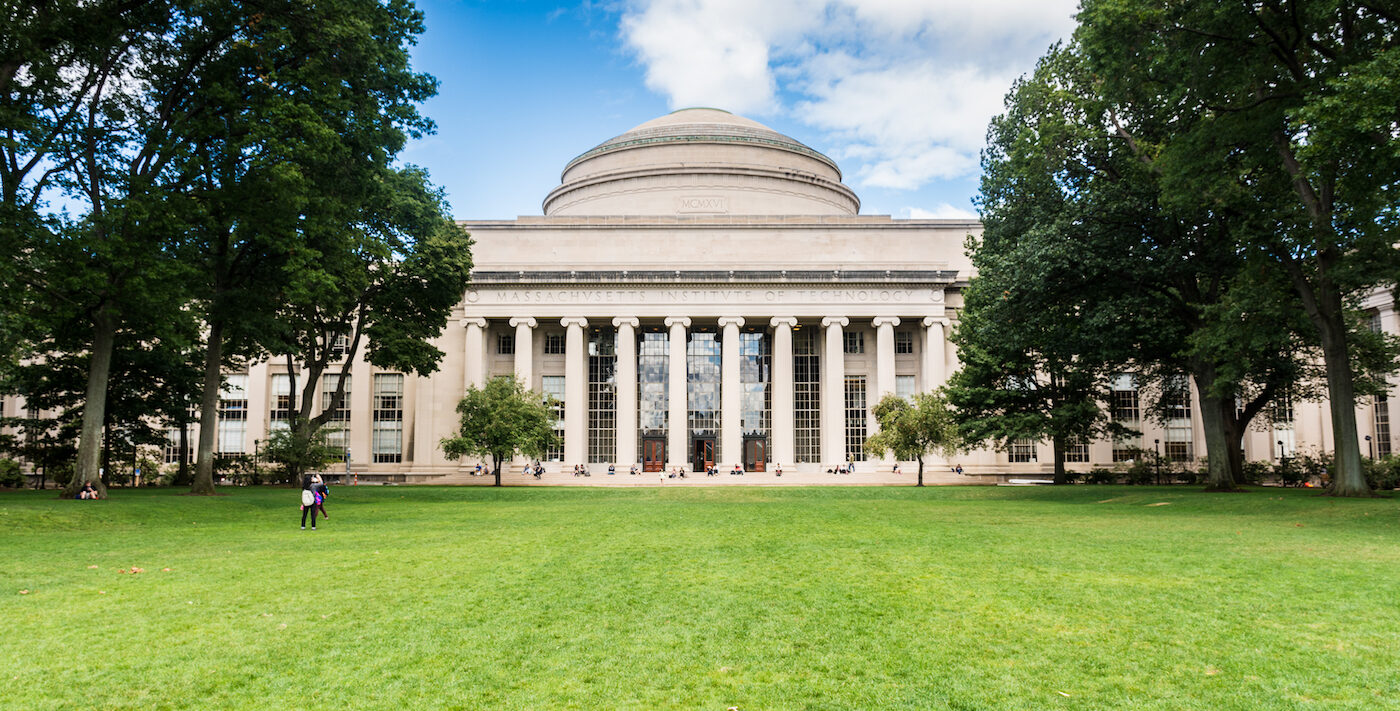
    Transform Your Career at MIT

    If you’re inspired by Olivia's experience and curious about what the program could do for your career, we’d love to hear from you! Learn more about the MIT Supply Chain Management Master's Program below.

    Learn More
  • An Online Course Sparked a New Career: Kevin Power’s Journey Through MIT SCM’s Blended Master’s Program

    December 9, 2025

    Kevin Power, SCMb ’25, earned his undergraduate degree in manufacturing engineering while working full-time at an oil refinery. He had never considered working in supply chain management; in fact, he didn’t know it was an option. After graduation, following a rigorous routine of shift work, long days, and evening classes, he began searching for new learning opportunities. In an article for the MIT Center for Transportation and Logistics, Kevin outlines his path from the MITxMicroMasters® Supply Chain Management Program to the MIT SCM Blended Master’s Program, and his post-grad experience with global AI hackathons and his continued research with MIT CTL’s Deep Knowledge Lab for Supply Chain and Logistics.

    Read the full profile on ctl.mit.edu »

  • Am I an Imposter?

    January 31, 2025

    Stepping onto MIT’s campus post-acceptance, I couldn’t shake the feeling that I didn’t belong. As I walked past the iconic Maclaurin building, overheard engaging discussions at Ripple Café, and used my student discount for the first time at the COOP, I kept thinking: I’m not as smart as everyone here. My undergrad GPA wasn’t a 4.0, I haven’t invented a world-changing product (yet), and I still can’t spell “Massachusetts” without looking it up. How could I possibly belong among some of the greatest minds in the world?

    Then came orientation. I met the most synergetic, welcoming, and supportive cohort, faculty, and staff. My feelings of intimidation pivoted to invigoration. Since that day, I’ve woken up each morning knowing I will be challenged but supported, inspired but humbled, stretched but empowered. As the initial awe of arriving on MIT’s campus settled into the rhythms of daily life, I came to some fundamental truths that I’d like to share:

    Everybody experiences imposter syndrome at some point.
    Honestly, if someone claims to have never felt this way, I’d challenge them to dig deeper. While the feeling is normal, it’s impossible for everyone to be an imposter. I quickly realized that I do belong here and that I bring unique contributions to the world’s most pressing issues. Most importantly, MIT thrives on its diversity of backgrounds, experiences, visions, and aspirations—and that’s what makes it so special.

    I’m smarter than I think.
    This isn’t to sound pompous, but it’s true. Walking into my first MIT exam, I fully expected a brain-twisting three hours. (To be fair, it was challenging.) But the sun rose the next morning, and I did much better on the exam than I’d expected! I realized that I can do this. More importantly, grades are only one part of the holistic MIT experience and don’t solely measure intelligence. The people, opportunities, and places at CTL and across MIT define this journey far more than any exam score ever could.

    My assigned cohort became lifelong friends.
    When I applied to graduate school, making new friends wasn’t at the forefront of my mind, unlike when I first went to college. While I anticipated broadening my professional network, I never imagined that the people I’d meet would span the globe, creating a friendship network across over 35 countries. I’d argue that this has been the greatest support in overcoming imposter syndrome, as I feel surrounded every day by friends who have become like family.

    What am I investing in if I’m not growing?
    Let’s be real—graduate school is expensive, and every day feels like drinking from a firehose. However, if I wanted to settle for the status quo, I could have stayed content with my current situation. Instead, I’m here at MIT, fully committed to making the most of every moment. When that inner voice tries to convince me I’m inferior to those around me, I remind myself that I’m here for a reason and absolutely belong.

    If there’s one thing to take away from this blog, it’s that imposter syndrome is something we’ve all experienced—and you are capable of achieving anything you set your mind to. I truly hope to see you at MIT soon!

  • A Non-Linear Path to MIT

    January 31, 2025

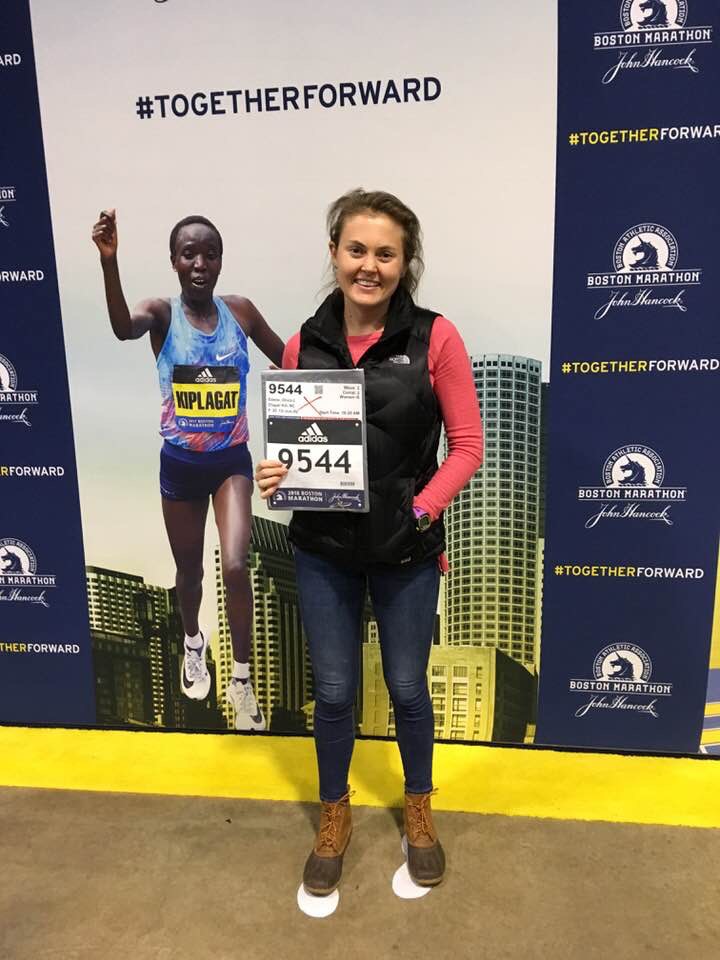
    The phrase ‘it’s not a sprint, it’s a marathon’ is something that I hold near and dear.  Since my early teens, I’ve been a competitive endurance athlete. To this day, mornings and weekends are often filled with athletics. While not directly tied to academia, I have found that it is a critical outlet to gain fresh perspective and reflect.

    Much like running a marathon, how to pursue the challenging agenda of global supply chain management is quite the opposite of a box-checking exercise. Solution development in today’s increasingly complex global stage requires consistent effort, innovation, and multi-disciplinary collaboration, which is why I ultimately decided on MIT’s Supply Chain Management blended Master program.

    Following my undergraduate career across various natural science disciplines from biomedical research at UNC Chapel Hill, to drinking water quality research in the Galápagos Islands, I knew I didn’t want to simply ‘check any boxes’ for my next career move. As a challenge to the status quo and the inexorable rise of my parents’ blood pressure, I did, ironically, check a box on an admittance computer screen that determined my next two years. One suitcase and a hiking backpack later, I headed to Ethiopia to serve as a U.S. Peace Corps volunteer teaching English to high school students.

    I often reflect on my time in the Peace Corps and note that these were some of the hardest times I will likely endure, but the two most precious. While the experiences provided significant challenges, they also brought a unique understanding of what I was, and continue to be, most passionate about – partnering with others, no matter the geographical location, to create a more sustainable and equitable environment for today, and many generations to come.

    A couple of years ago, following the completion of a Master of Environmental Management, I stepped, rather blindly, into a new challenge. Leaning into a mentor’s guidance, I made a career pivot that was uncharted territory, and not directly aligned with my previous academic or professional training. Despite contributing to several organizations’ environmental, social, and governance (ESG) programs, I hadn’t had the opportunity to collaborate directly with value chain partners. Innovating within the foodservice industry to drive a more sustainable packaging supply chain has resulted in incredibly challenging, yet rewarding, years.

    Simultaneously, to support my understanding of supply chain management and related functions, MIT’s MicroMasters program far exceeded my expectations. What started as a strategy to build on my environmental management background to bridge my knowledge to supply chain management, analysis, and systems thinking, evolved into so much more. Ultimately, the blended Master program was the right fit following completion of the MicroMasters, as it allowed me to continue to focus on sustainable sourcing initiatives, before moving this past January. After tackling an 18-hour car trip and digging myself out of several inches of snow in the frozen tundra, otherwise known as Cambridge, I couldn’t be surer in the choice of the program!

  • From one of the oldest graduate halls in the USA

    January 31, 2025

    “But for a few small changes, our lives could be profoundly different” one of my favourite quotes by Brian Klass and something that resonates with every one of us.

    What if Covid had not forced us to stay indoors? What if I had not been bored out of my mind after work? What if a well wisher had not suggested the MITx Micro Masters Course to me (“to kill my boredom”)? What if I had not taken up a chance internship opportunity during my undergraduate years, which eventually sparked my passion for Supply Chain in the first place? What if indeed.

    Well, all the above happened – by chance I might add, and here I am halfway across the world from everything I knew and grew up around, for a roller coaster ride.

    On the 2nd of January at 2 am (very late into the night or very early into the morning, whichever you would) I started my time travel to Boston. After a tedious 24-hour travel, I landed in Boston on the 2nd of January. After almost a month of being here, I am still getting used to Boston’s unforgiving weather. Thankfully it was just a 15-minute ride from the airport to my dorm – Ashdown House. As someone who has been living away from home and with roommates since the age of 13, I am not just accustomed to, but I also enjoy living with different people from different walks of life and learning about new cultures. I wanted shared housing (my opinion probably differs from most others here).

    During my search for the “right” room during my time at MIT, thanks to the residential cohort’s previous blog post about MIT graduate housing, I was able to narrow down my housing options. And then I came across some very interesting facts. Ashdown house is supposed to be the second oldest graduate housing in the United States and the first in MIT.  As many of you (or a few of you) may know, Ashdown House was relocated from W1 to NW35 in the year 2008. So, the building is new, but the legacy is old. I felt it would be interesting to be associated with a dorm that has such a rich history and so that became my choice of stay. And not to forget – tons of free food with the Coffee Hours and Sunday Brunches!!

    So by chance, now here I am in my new “home” with two wonderful roommates – one of them is an amazing baker I might add (to the benefit of someone that has a particularly sweet tooth), still getting accustomed to the Boston weather. SCALE has been hectic but extremely rewarding.

    And so far, it’s been real, it’s been fun. It’s been real fun. Looking forward to what else MIT and Ashdown has in store for me.

  • Student Spotlight – Rudy Narula

    October 28, 2024

    As we kick off another application season, we reached out to recent alumni to learn about their experience in the Supply Chain Management (SCM) Master’s program and its impact on their careers. 

    We sat down with Anirudh “Rudy” Narula, a Business Systems Manager at Soleno Therapeutics, a small biopharmaceutical company in the pre-commercial phase, and a graduate of the MIT SCM Master’s Class of 2024. Prior to the program, Rudy spent over five years at HCL Software.

    Rudy’s first manager in his professional career pushed him to explore his MIT Master’s, having gone through a program with MIT Sloan School 40 years prior and reflecting on its transformational experience that broadened his perspective. With this guidance, Rudy started the Supply Chain Management MicroMastersprogram before leaning further in and applying to the complete 10-month program. For Rudy, the SCM program opened doors for him to pursue new career opportunities in new fields—a pivot he was excited to explore.

    We spoke with Rudy to get a closer look at his experience—what attracted him to the MIT Program, how the program set him up for success amid his desired career pivot, and what he hopes other students will get out of the program.

    Why did the MIT Supply Chain Master’s program stand out to you?

    The program stood out for a handful of reasons—the firstbeing the length, which also translates to cost. Unlike traditional programs, MIT’s program is ten months, not two years. I also liked how the program felt more technical and tactical than what you’d get from a general MBA. There was a focus on the new age of technology, like machine learning and AI, that was relevant to the world we live in today, which I liked. And lastly, the class sizes were great. I was part of a very large program for undergrads at U.C. Berkeley, and our graduating class was upwards of 8,000, 500 of which were in my economics major. It isn’t easy to feel genuinely connected with so many students. However, with the MIT program, we had around 40 residential and 40 blended students, so you could get to know people one-on-one, which was nice.

    What was your favorite part of the program?

    I loved how easy it was to connect with classmates, faculty, and PhD students teaching. Everyone was so welcoming and engaging. I thought I might come across people with big egos or an air of superiority around them, knowing how prestigious MIT is, but that could not have been farther from the truth!

    “The program welcomes people with all backgrounds—for individuals without deep supply chain experience and with those eager to specialize in areas like reverse or last mile logistics.”

    How did the program help you land your current position?

    Not only does the MIT name carry weight and help get your foot in the door, but the program itself exposes you to classes and experiences that greatly help you navigate competitive interviews. During the interview process with Soleno Therapeutics, where I am now, I spoke with nearly a dozen team members. With each interview, I could talk and relate to many different things they were doing and the challenges they were navigating, even with my limited prior supply chain experience. In the short time I’ve been here, I’ve been able to draw on learnings from an MIT database class to help the supply chain team with process improvements—they were using Excel spreadsheets to manage inventory, and I was able to set up a database and front-end interface for their team.

    What do you hope others will gain from the program?

    Firstly, I think it’s important that new students come curious and open—you gain a lot out of the gate with this mindset. Secondly, I hope others walk away knowing they can take on any and all challenges, as I learned. Coming from different backgrounds, whether you have experience in Supply Chain or not, the program reinforces that you can take it on no matter what is put in front of you.

    “There’s just so much to do by keeping an open mind and exploring new opportunities that will have an impact and let anyone get the most out of their experience as part of the community.”

    If you’re inspired by Rudy’s experience and curious about what the program could do for your career, we’d love to hear from you!

  • Student Spotlight – AJ Shaw

    October 21, 2024

    As we kick off another application season, we reached out to recent alumni to learn about their experience in the Supply Chain Management (SCM) Master’s program and the impact it has had on their careers. 

    We sat down with AJ Shaw, a Program Manager at Google and a graduate of the MIT SCM Master’s Class of 2024. Prior to the program, AJ attended Michigan State University, studying Applied Engineering Sciences with a concentration in Supply Chain Management. After undergrad, AJ worked at Microsoft as a technical program manager for three years, where he became eager to further grow his academic knowledge in supply chain.

    Heading into the MIT Program, AJ recognized how much change was happening across the supply chain industry and the deep need for continuous improvement. He joined the program with a desire to learn tangible skills—from academics and from world-class leaders—to set himself up for long-term career growth and success.

    We spoke with AJ to get a closer look at his experience—what inspired him to choose MIT, how the program shaped his new career, and his advice for future students. 


    What was your favorite part about the Supply Chain program?

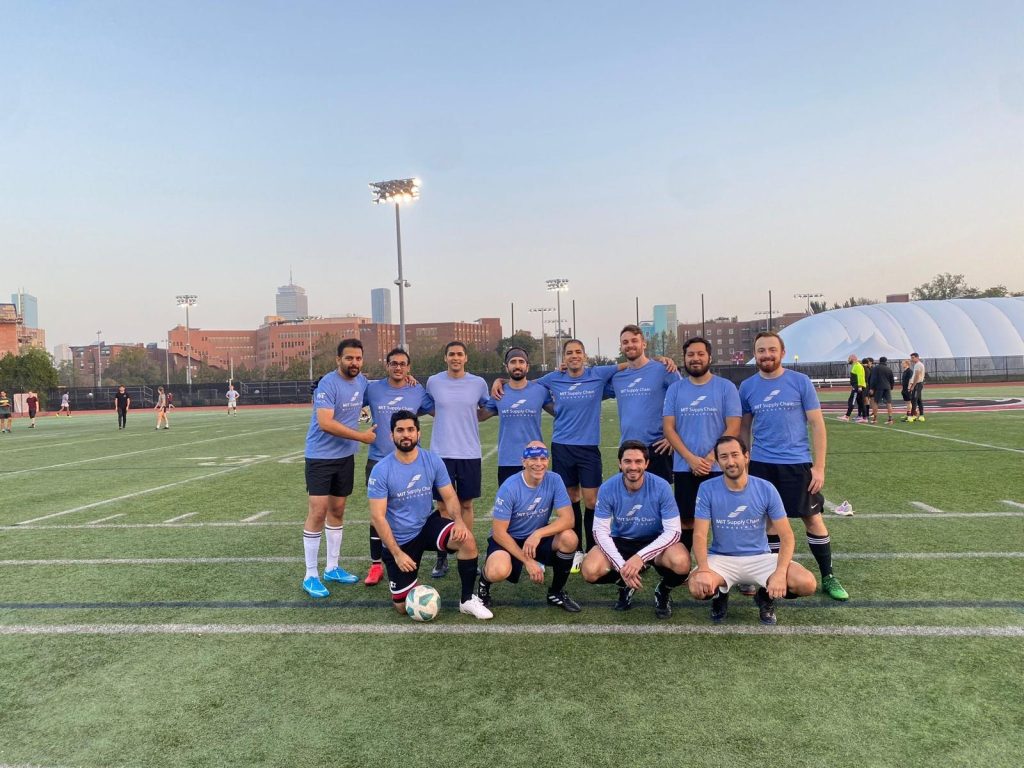
    At MIT, you are part of a vibrant community with people from all walks of life with different job histories, geographic upbringings, and perspectives on the world. I loved coming together and learning alongside each other. And not just learning but playing together. I played intramural soccer with my classmates, which was a great experience. There is a memorable photo of our team representing eight different countries! It highlights the global impact and reach the program provides.

    What was your most memorable class that you took while at MIT?

    The program does a great job of ensuring students can customize their class loads to reflect their interests. I particularly liked the Current Events and Supply Chain course. It was a class where the students could present a topic they were passionate about, do their research, present it back, learn, and ask questions about other classmates’ topics. I loved having the opportunity to explore different aspects and elements of the supply chain and do it from a perspective that we’re passionate about as students.

    What was the most surprising part of the program?

    One of my biggest surprises was seeing how engaging all the alumni were across the program. The MIT program spoke frequently about it through the admissions process, but it hit me once I was there. The alumni I met were always ready to help me and my classmates. Plus, our career advisors, Justin and Len, were fantastic in understanding what we were interested in from a location and job function perspective, putting us in touch with specific alumni to help us find our path forward. From there, the relationship with the alumni grew organically and helped form some long-term mentorships.

    “From the alumni network, the program helped foster a lot of opportunities with my current employer, Google. It was great to make those connections while I was in the program, get advice for how to break through in my application, and now have familiar faces in my new role I started this Fall.”

    What type of person would you recommend for the program and why?

    This program can be for anybody and everybody, whether you are looking for a career pivot or hoping to advance your career through advanced academia. I loved my job at Microsoft, but I wanted to try something new and expand my career horizons.

    The program helps guide you to understand what’s most important to you, whether it’s the job function, the industry, the location, or something else. Throughout the program, students are exposed to a robust alumni community, great networking sessions, and distinguished guest speakers, all of which drive value for your time at MIT and ultimately make the program stand out.

    “In just one year, the MIT program provides access to phenomenal faculty, fellow students, peers, and great opportunities in the coursework.”

    If you’re inspired by AJ’s experience and curious about what the program could do for your career, we’d love to hear from you!

  • Student Spotlight – Loreto Cantú

    October 7, 2024

    As we kick off another application season, we reached out to recent alumni to learn about their experience in the Supply Chain Management (SCM) Master’s program and the impact that it’s had on their careers.

    We sat down with Loreto Cantú, a Supply Chain Data Analytics Manager at L’Oréal and a graduate of the MIT SCM Master’s Class of 2024. Originally from Monterrey, Mexico, Loreto earned her undergraduate degree in Industrial Engineering from Tecnológico de Monterrey, studying abroad at UC Berkley for one semester. After graduation, she gained experience in demand and supply planning at OXXO, the largest convenience store company in Latin America.

    A couple of years into her career, Loreto decided to take the leap to pursue her Master’s at MIT, a goal she set since winning MIT’s Supply Chain Excellence Award during undergrad. The opportunity to return to the US to further advance her career was a driving force for her to apply for the 2024 program. At MIT, Loreto served as Co-President of her class, where she helped build a strong community among her peers, especially fellow international students.

    Loreto’s journey to MIT was fueled by her ambition to grow professionally and make a global impact. We spoke with Loreto to get a closer look at her experience—what inspired her to choose MIT, how the program shaped her career, and the advice she has for future students.

    How did you find out about the program, and what motivated you to apply?

    When finishing my degree, I received the Supply Chain Excellence Award, a scholarship unique to the MIT program. That’s how I first learned about MIT’s post-graduate opportunities, and as I entered the workforce at OXXO, I made sure to get all the experience I could to prepare for MIT.

    I knew that I would be one of the youngest in the cohort, and I had to get all the experience, all the insights that I could as fast as I could so that I could eventually give back to the MIT community with the knowledge that I had back from Mexico.

    What made the SCM program stand out to you compared to other options?

    After doing all the trade-offs between an MBA and the SCM program, I realized it’s a one-year program, which means half the cost. You get both the business and technical sides, and you can personalize the program as much as you want. That’s what differentiates it from an MBA.

    “There’s flexibility. It’s half the time. It’s half the price.”

    What was your favorite part of the program?

    Everybody will say the same thing: it’s the people. The network is so important. I’m also grateful for the opportunity to be class president, which exposed me to new challenges and leadership opportunities.

    How did the program help you land your current role at L’Oreal?

    Right after the program, I accepted an offer from L’Oreal in New Jersey. This opportunity came from the SCALE Network, which exposes students to various speakers and conferences and eventually landed me a role in Supply Chain Data Analytics.

    “I’m very grateful for MIT for putting me in the position where I could meet such great and important people in the industry.”

    What type of person would you recommend for the program?

    Anybody! Whether you have a management, engineering or some other background, or you have two or ten plus years of experience. This program is an amazing opportunity to catapult your career.

    Loreto’s story is a great example of what’s possible with our Supply Chain Master’s program. From Monterrey, Mexico, to landing a role at L’Oréal in New York, her journey shows how the right support, skills, and network can help turn big dreams into reality.

    If you’re inspired by her experience and curious about what the program could do for your career, we’d love to hear from you!

  • Maria Lucchi

    March 27, 2024

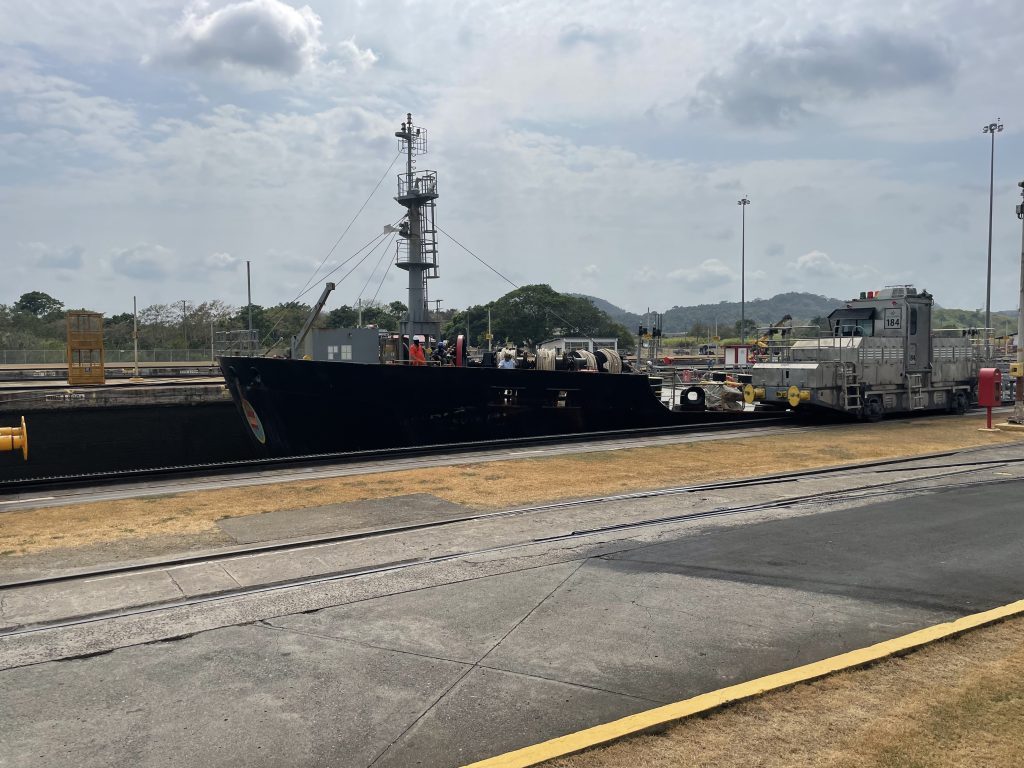
    Since starting the SCM program at MIT, I’ve experienced several things for the first time (machine learning, humanitarian logistics, and truckload procurement to name a few!) Last week, I was able to add a few more items to that list – seeing the Miraflores locks in action at the Panama Canal and getting my first glimpse at the Golden Gate bridge. Thank you MIT SCM!

  • Empowering Dreams: A Journey from Personal Impact to Global Supply Chain Leadership

    November 27, 2023

    When my career started, the decision to stay in the healthcare industry was driven by an impactful personal experience; my sister went through an open-heart surgery. I immediately knew I wanted to pursue a career within the healthcare industry. Following that mission, I decided to join one of the most lifechanging healthcare industries in the world. As I reflect on my previous experiences, the MIT SCM Program offers the perfect opportunity to gain additional understanding of how Supply Chain environments operate, and as a result, strengthened my ability to impact people’s lives through my daily work.

    My life’s mission and career has shaped me to become a professional with a high sense of responsibility, passion about cultivating partnerships, and desire for making an impact on the world. As one tries to approach a complex problem within any field, one of the most impactful ways to tackle it is to bring diverse perspectives into a competitive environment to drive positive results. This is exactly how I’ve been working since the SCM Program started. The MIT SCM cohort and MIT Academic environment provide such a rich and diverse multi-cultural atmosphere that allows students to approach every challenge with a high sense of competitiveness while respecting everyone’s contributions. And that’s where the beauty of this program is: 70% of the class comes from an International Country and 30% of the class is represented by women.

    Being a Latin woman within the Supply Chain industry and the only Puerto Rican in this year’s MIT SCM Residential program, I constantly think about the importance of continuing to support girls to dream BIG! One day it was me dreaming about being HERE, and now here’s me showing up to support you on your journey. 

    My vision for my future is to focus on continuing to reduce complexities within global environments; and drive Supply Chain agility and responsiveness through innovative solutions, while accelerating the ability to bring life-changing products to customers in more efficient and effective ways. Today I can reiterate that the MIT Supply Chain Management Master’s Program is definitely the best vehicle to gain the necessary tools to fulfill that vision.

1 2
Next Page
Stay Informed
Take the first step to joining our vibrant supply chain community.
Sign Up to Learn More

At the MIT Center for Transportation & Logistics

The MIT Center for Transportation & Logistics has been a global leader in supply chain management innovation, education, and research for fifty years. It has educated practitioners worldwide and has helped numerous companies gain a competitive advantage from its cutting-edge research.

Contact us at scm-admissions@mit.edu

Apply Now
  • Admissions
  • Directory
  • Education
  • Employment Outcomes
  • Experiential Learning
  • Student Experience
  • Search
  • LinkedIn
  • Instagram
  • Facebook
  • YouTube
  • Twitter
  • SCM Voices Blog
  • News and Events
  • Corporate Engagement

MIT Supply Chain Management
1 Amherst Street, 3rd Floor, Cambridge, MA 02142

  • Accessibility