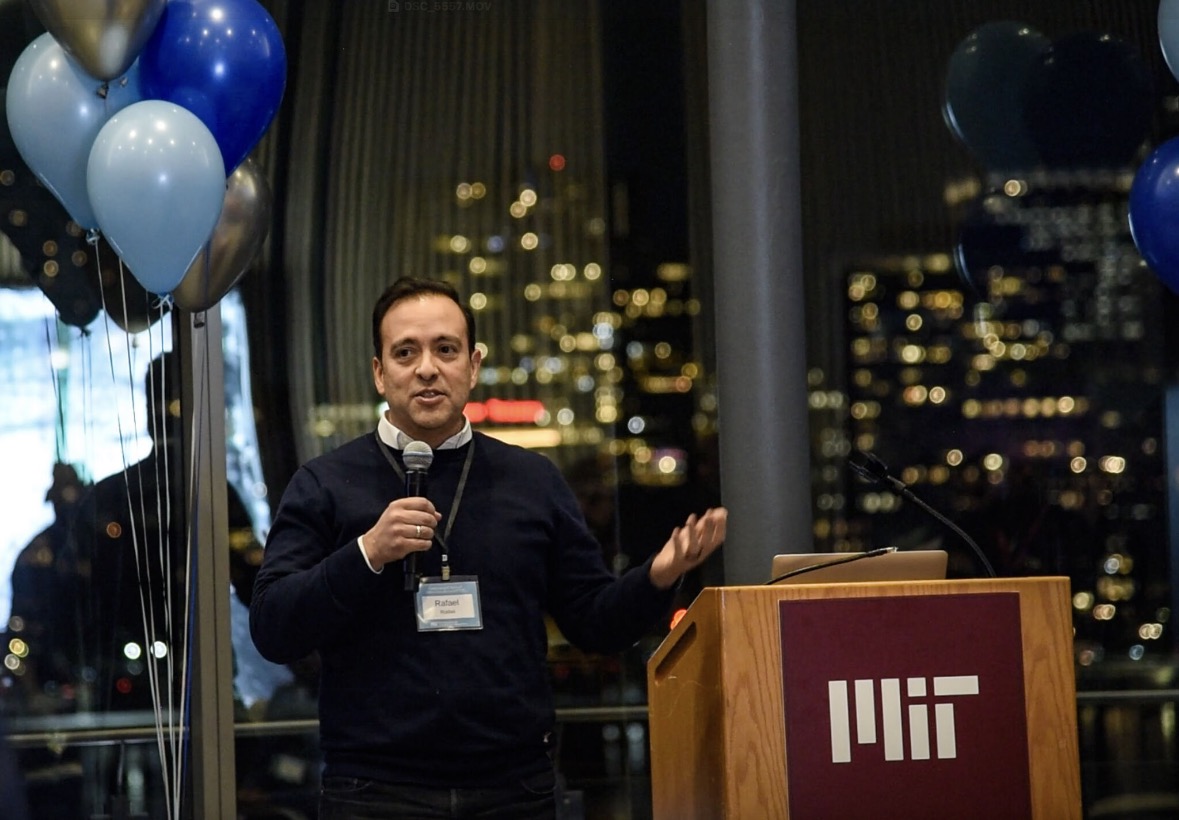
Rafael Rodas didn’t come to MIT’s Supply Chain Management program to switch careers; he came to stay ahead in his industry. After over 15 years in supply chain and operations, most recently as the COO at Clio Snacks, Rafael was already leading strategy for a fast-growing brand. What he sought from the program was a deeper understanding of the technology reshaping his field, so he could build stronger teams and make smarter calls about where to invest.
That search led him from a MicroMasters course taken during the pandemic to a full semester on campus in Cambridge for his Master’s in Supply Chain, and ultimately changed how he leads at Clio today.
Tell us about your background and role at Clio Snacks.
My background has been in supply chain and operations management for my whole career. I started as an intern and then an analyst in UPS’s Industrial Engineering department while I was still in school. After graduating from Rutgers, I joined a boutique consulting firm in New York City focused entirely on supply chain and operations, doing value creation work for clients. While I was consulting, I went to Columbia for my MBA through an executive program. After my MBA, I moved from consulting into industry, taking on director and VP of operations roles, mostly at middle-market, private equity-backed companies. Ultimately, I would describe myself as a lifelong learner, and my career has grown alongside that.
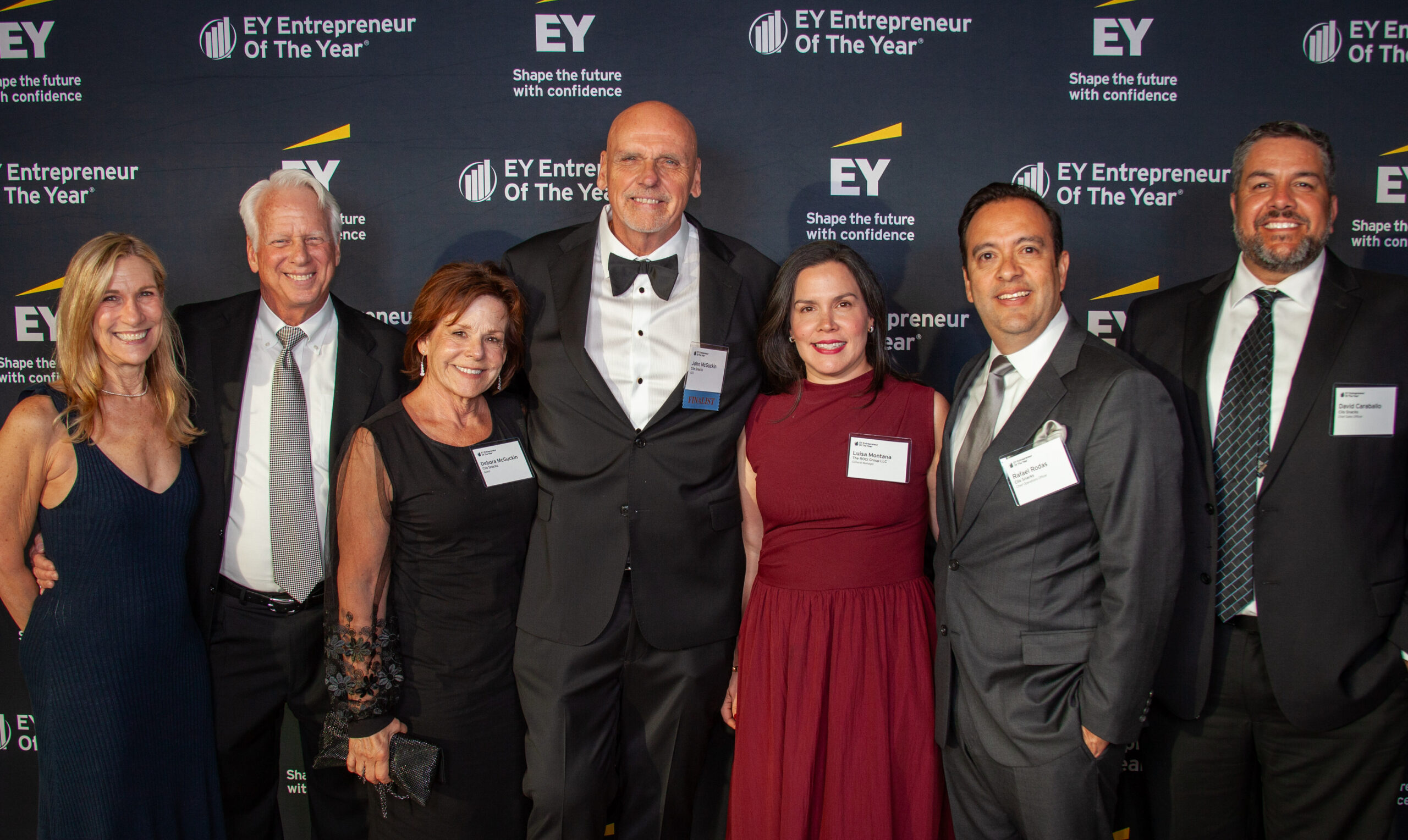
That path led me to Clio about four and a half years ago. Clio was founded in 2017, and the product found traction with consumers quickly. After a couple of investment rounds, the company partnered with a PE sponsor and needed its first group of professional managers. I joined to build out manufacturing, supply chain planning, and technology as the company scaled distribution and sales. It’s been the most rewarding stretch of my career, mostly because it’s about building the team and infrastructure that gets the work done, not just doing the work myself.
What drove you to pursue a Master’s at this stage of your career?
During the pandemic, I was looking for content on newer data analysis tools. The volume of data and technology in supply chain had grown so much that I wanted to understand how the analysis behind it was changing. I found MIT’s MicroMasters program on edX and took one course, Supply Chain Analytics, without realizing it was the first of five in a full MicroMasters credential. The production quality and immediately applicable content was what convinced me to keep going, and about 18 months later I’d completed the whole credential.
At that point I didn’t think a full semester at MIT was realistic. Walking away from my career for a Master’s degree felt like a stretch, but the idea stuck with me. The MicroMasters courses were asynchronous, so I could fit them around work: nights, weekends, early mornings, wherever I could find the time. That flexibility is ultimately what made it feasible to go further. Once I’d finished the credential and understood what a semester on campus could look like, I found a way to make the stars align. I am very thankful for the support from my team and CEO at Clio, who let me work remotely, and flexibility from MIT that let me carve out mornings for meetings back home.
What made the SCM Master’s the right fit, versus other paths?
I wasn’t necessarily looking for tools to physically do the work, what I was really looking to understand was how technology is changing the field so I could better equip my team. A big part of the program is understanding the actual mechanics of AI and machine learning, not just treating them as a black box. That matters a lot right now: I get pitched an AI agent for one thing or another almost every week. Understanding the underlying technology — what data foundation you need, what stack actually makes sense, and what’s needed to successfully deploy the technology — changes how you evaluate all of that.
It also mattered to me because Clio is a small, growing company without the budget for a large developer team. The program helped me think about how to build the right technology stack and hire the right talent so a company our size can take advantage of AI in a way that’s cost-effective, rather than just buying off-the-shelf tools that won’t deliver a return.
What would you tell a fellow senior leader who thinks a program like this is meant for someone earlier in their career?
It takes some curiosity, but I’d say the combination of the MicroMasters and a semester at MIT is the best of both worlds. The MicroMasters builds a common foundation in supply chain knowledge, and the semester lets you tailor the experience to whatever your career actually needs. Through the Center for Transportation and Logistics, you also have access to Sloan School of Business classes combined with a supply chain and operations focus, which is a great way to really personalize your experience for the greatest outcome.
Once you understand what it is that you want to get out of it, then I think it’s really about leveraging all of the capabilities and the tools that are available at MIT to make your program work for you.”
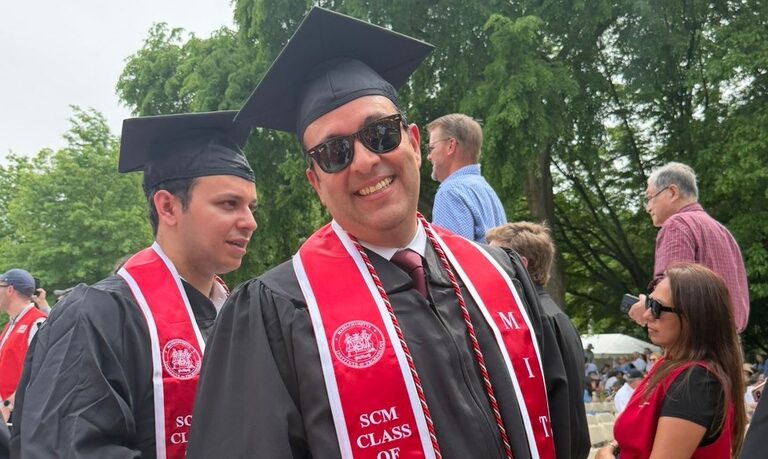
Most of my cohort was earlier or mid-career, some pivoting into supply chain for the first time, and there were a few of us in my class that definitely pulled our age average up. But the program is highly customizable once you understand what you want out of it, and the CTL team helps to figure out the right mix of research and classes. Being embedded in Cambridge, with access to the libraries, labs, and researchers, gave me more depth and more flexibility than any multi-week executive education program would have. It was a big enough draw that I relocated to Cambridge with my wife and daughter for the semester, and I’m glad I did the work to make it happen.
How has the program changed how you lead your team and think about supply chain at Clio?
The tactical fundamentals of supply chain haven’t changed: you still have to procure, move, make, and deliver goods. What’s changed is my thinking on who has access to leading-edge technology. I used to assume that kind of deployment was reserved for large companies with big IT teams. The program along with the explosion of new technologies in the market shifted that: there’s real room for middle-market and growing companies to build effective, cost-effective technology capabilities if you bring in the right talent and know how to navigate your options.
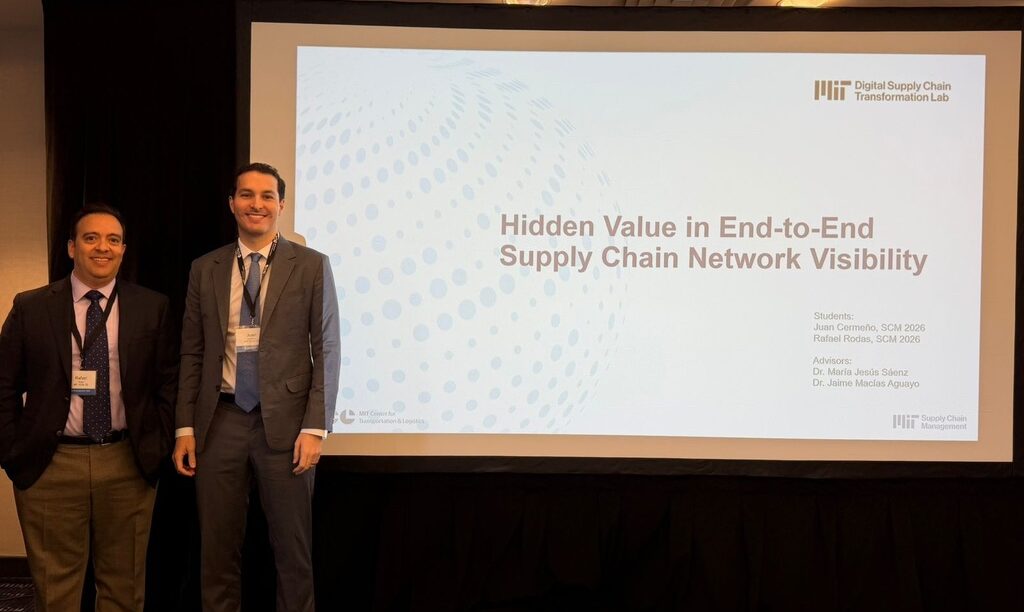
It’s also changed how I evaluate operations talent. It takes more than functional expertise now; technology fluency must be part of the skill set, which is why MIT builds it so heavily into the curriculum. One of the biggest contributions of the program was the chance to do applied research with the Digital Supply Chain Transformation Lab, working on supply chain visibility. Connecting what we learned in the classroom to a real, seemingly intractable problem through simulation made it tangible.
Being embedded in Cambridge, with access to the libraries, labs, and researchers, gave me more depth and more flexibility than any multi-week executive education program would have.”
What would you tell someone who was on the fence about pursuing a Supply Chain Management Master’s from MIT?
MIT MicroMasters content is a great entry point for anyone intellectually curious who wants to keep learning, and it’s a very valuable pathway into the full Master’s program. Doing the on-campus semester takes support, whether from an employer or family, and a fair amount of coordination on your own end. But it’s absolutely worth it. Once I was there, the opportunities went well beyond what I expected on paper. I actually had to limit myself, since I was also making time for work and family outside of the on-site learning opportunities. If taking the leap to do a supply chain master’s at MIT is a possibility for you, I wouldn’t hesitate.
Transform Your Career at MIT
If you’re inspired by Rafael's experience and curious about what the program could do for your career, we’d love to hear from you! Learn more about the MIT Supply Chain Management Master's Program below.
Learn More