
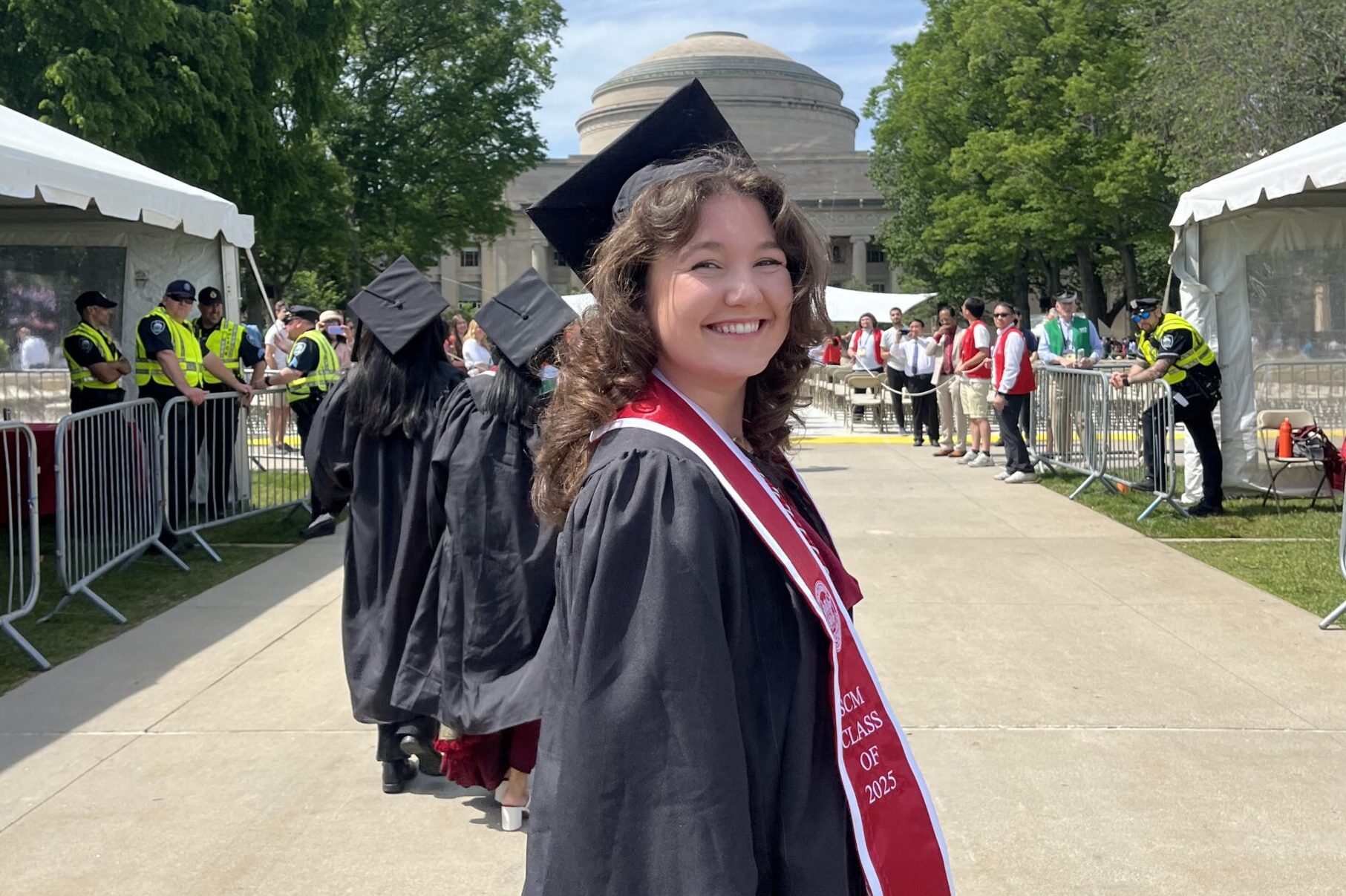
I tore my ACL two months into the MIT SCM program.
Not before. Not after. Two months in, right as the workload was ramping up, I was still finding my footing, and in front of people who, a few weeks prior, had been complete strangers. And it wasn’t even in “a cool way”, if there is such a thing… It was playing intramural soccer and losing to some undergrads. A weird step on the turf, a scary sounding crunch, massive amounts of pain, and a lot of unprofessional words to follow.
I sat in the ER in shock. This is not the plan; it is embarrassing, and it is totally going to mess with the rest of the semester. I wasn’t even thinking about the rest of the year… Surgery, recovery, physical therapy, all stacked on top of coursework and the quiet pressure of one of the most demanding programs in the country. Plus, try to navigate Cambridge, MA in the winter, with ice and wind, while on crutches!
Looking back a year post-graduation and 1.5 years post-operation, I think about this as a crazy story of some not-so-great luck. But it’s not the only story of life in the cohort. Throughout 10 months at MIT, people dealt with struggles of all kinds. Maintaining connection thousands of miles away, managing personal health scares, losing family members, and recovering from their own surgeries, among so many others. At the same time, people hit milestones. In my cohort alone, there was an engagement, a few hardcore half and full-marathon runners, start-up successes, exchanges of culture, friendships galore, cooking “classes”, and one person finding out they were going to have a family shortly after they received another diploma.
This is the short list of the good and the bad, but whether it was silent or loud, life continued every day outside of MIT. Life doesn’t pause for your academic timeline.
If you’ve been considering a graduate program, you’ve probably run the mental math a hundred times. When work slows down, when this project wraps up, when the kids are older, etc. For many, if not all, the right time is a much more complex calculation than any optimization you’ll do at MIT.
I am here to tell you the right time does not exist. Not to discourage you, but to free you. Sure, there will be “better times” than others, but kicking the can down the road until the stars are perfectly aligned is going to involve a lot of hoping, waiting, and, possibly, missing an opportunity to boost your career.
There is a variety of sacrifices needed to get to Cambridge, MA in August. There are a number of sacrifices and challenges known and unknown to graduate the following May. None of us had perfect circumstances. All of us made it to commencement.
So how do you find “a” right time?
Apply for the MIT MSSCM program when you’re ready to be challenged, not when you’re ready to be comfortable. Go when the investment makes strategic sense for your career, even if the timing feels messy. Go when you’re willing to let the program become a part of your life, rather than waiting for your life to step aside.
If you’re sitting on this decision wondering if now is the right moment, the answer is probably yes. Not because conditions are ideal, but because they never will be, and that’s okay. My ACL is all healed up. I am happily employed. Today I have many stressful memories from my time in Massachusetts, and yet they are far outweighed by the mountain of fond memories and future plans with friends from that crazy year.
The program didn’t wait for any of us to be ready. And we’re better for it.
Lydia Whipple ‘25 is a graduate of the MIT Supply Chain Management Master’s Program. Lydia is Vice President – Performance & Technology at AlixPartners.