Being at MIT, it is easy to assume that everyone around you is operating within their own perfectly optimized system. How else could a century and a half of world-class minds have so consistently pushed the limits of possibility? My experience here has reinforced that the only way to drive and sustain consistent progress is by knowing when to optimize and when to execute.
For much of my life, I viewed each day as a new mathematical optimization problem to solve. I woke up with an objective function (my primary goal, like maximizing the amount of work I output), decision variables (the choices I control, like how I spend my time), and constraints (what my choices must respect, like project deadlines). In this example, optimization finds the single best schedule that maximizes my output while keeping everything in balance. Executing this should be straightforward, so why did I notice that progress towards my objective functions, the things I was trying to prioritize, often stalled?
Day to day bumps in life are inevitable, and they often force priorities to change. As if on cue, I received the following surprise email as I was writing this blog post –
Subject: SCM.291 Assignment #1 Presentation Nudge
Hi Group 6, I wanted to let you know that the teaching team really enjoyed your [recorded] presentation, and you may be asked to present [live, in-class] tomorrow. Thank you, and nice job!
With only 12 hours’ notice for a “possible” presentation (that would not impact my grade), my optimization habit kicked in. Should I scrap my plan to work on a final paper for another class to prepare for a low impact maybe? In the past, I would have abandoned my schedule and searched for a new optimal path, regardless of the lost momentum. Why would I follow a roadmap that no longer guaranteed the best possible outcome? In this instance I quickly determined that the cost/benefit of additional preparation was not worth disturbing my current balance, which ended up being the right call as my group did not get asked to present live. In reflection though, the thought process that brought me to this question answered my original question.
But, as Heraclitus noted, change is the only constant in life. The constraints you are bound to, even the goals you are working towards can start to change the moment you commit to a plan. In reality, it is impossible to make a static plan that will keep you on the optimal path for its entire duration. But this constant change does not mean one should get stuck always searching for the optimal path, and this was the root of my problem. Meaningful progress cannot happen in the loop of indecision, where one gets stuck cycling through planning, optimizing, and re-optimizing. Instead, I realized one must prioritize a more iterative loop: using systems-level view to craft and commit to a robust plan, recognizing in real time the moments that do require course correction, and using self reflection to improve the next plan.
There is a time and place for optimization, for strategy, but it is not every hour. Closing the original example, I can dramatically simplify my daily optimization question by using the linear equation that is my title. The variable y is my work output, the slope m is the efficiency at which I execute, and the variable x is the amount of time I put into execution. The last piece, A Bias for Action, is the dividend I get for leaning into change and executing. It ensures that even when conditions are not ideal, the trajectory of my work reliably moves forward every time I prioritize the mentioned iterative cycle.
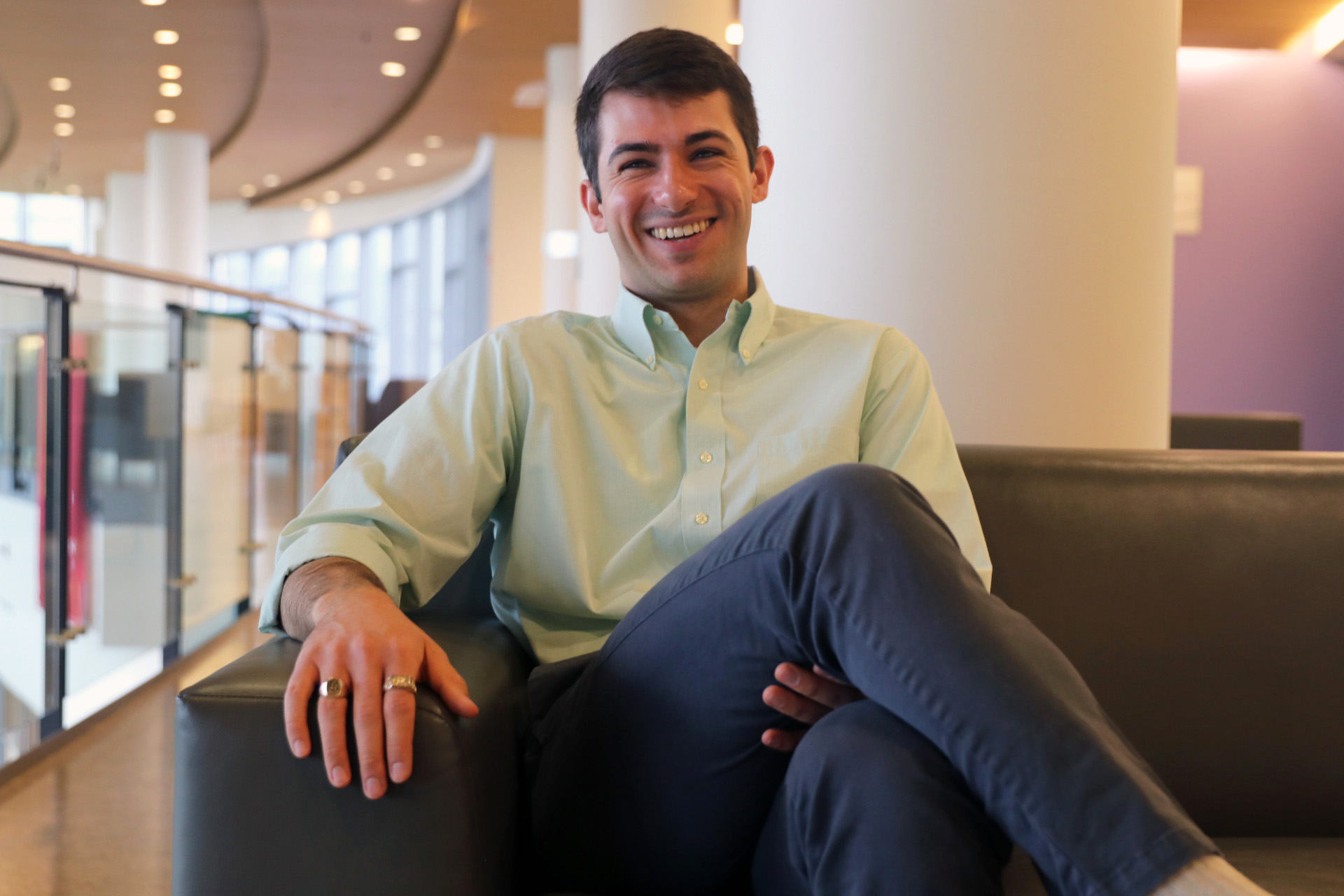
After graduating from Virginia Tech with his Bachelor’s in Industrial and Systems Engineering, Gavin Calarco joined GE Vernova’s Operations Management Leadership Program (OMLP) in the Gas Power division. After four impactful rotations in tactical supply chain roles across three different manufacturing facilities, he rolled off as a Material Requirements Planner and Buyer in Greenville, SC. Gavin’s professional passion revolves around building sustainable systems through clear standard work, daily continuous improvement, and data-based decision making. His vision is to be a transformational supply chain leader that blends emotional intelligence with technical depth – someone who develops systems that both reduce churn and elevate the problem solving ability of the organization.