For the past few years, when someone asked me what job I wanted, I’d answer with this: Chief Analytics Officer for a global supply chain organization that impacts critical infrastructure.
You will not find that title on LinkedIn, and that is intentional.
I don’t actually need to find this exact role. What I need is a compass to guide me through decisions in my career. In my response to this question, every word has a meaning. Analytics is in there. Global is in there. Critical infrastructure is in there. People is embedded in there. Each of these words made its way into my compass not only from my career aspirations but also from paying attention to the moments when the work felt like it mattered.
It’s hard to “find your passion,” and I’m a believer that it’s not just a feeling that you can wait for, but a compass that you put down on the map and use as a guide throughout your journey.
What Each Word Is Doing
This description of my ideal role did not arrive whole; it’s been something I’ve iteratively assembled over five years.
Analytics came early on for me, as I recognized that there’s a lot of power in data-driven decision-making, and many companies struggle to wrap their arms around their data. I decided to join Accenture after completing my undergraduate program in industrial engineering at Penn State to learn what real enterprise analytics entails. My most satisfying projects at Accenture were the ones where the analytics actually drove the decision: a CapEx model that changed how a leadership team thought about their investments, and a capacity simulation that surfaced a constraint nobody had named. The fun came from being the one who really understood the data and helped guide decisions based on facts.
Critical infrastructure came next. At Accenture, I spent a stretch working with a national telecom client, going deep enough into understanding the criticality of the telecom network. We were disconnecting legacy services, and the most stringent rule was that you do not unplug a 911 service. When someone is in distress, there’s simply no acceptable downtime. Pretty quickly, I started to feel the same sense of pride that veteran network engineers do when they’re talking about building and supporting a national network. I noticed that I do not feel the same gravity in my work if I think about introducing a new flavor of energy drink, or making sure a sunglasses launch hits its target. That is not a knock on those businesses (many people I respect do that work incredibly well), it is just another point on my internal compass for what is important to me.
Global and people (via ‘Chief Officer’) come together. Growing up, my dad would be away, sometimes for two weeks at a time, traveling to Europe and Asia, leading teams for a Fortune 500 manufacturer. When I was even younger and before I was born, he and my mom lived in the Netherlands, France, and England, which gave them an international experience that they instilled in our family. Yet the part of living and traveling internationally that mattered most to my parents was not the location, but the unique and diverse relationships they formed. As I entered the workforce, I began to form a similar opinion: it was more about finding the right people to work with. My former boss at Accenture used to say about someone that we admired, “Ben is building a team,” even when there was not a formal team to build. What he meant was that the work and the people you work with are inseparable, and that finding the right team of people is at least as important as finding the right work.
So, when I say the title is not the point, I mean it. If someone offered me a Chief Analytics Officer role tomorrow at a consumer goods company, I would pass. The title is not the goal. The four phrases around it are.
The Filter in Action
A guiding sentence like this is most useful in moments when the obvious answer and the right answer are different.
In my fall semester at MIT, I dropped a class. As part of my Master’s in Supply Chain Management curriculum, I registered for System Dynamics which was just the kind of class my modeling-first instincts naturally pull me toward. Halfway through the add/drop period, I swapped it for Accounting Information for Decision Makers (AI4DM). I realized that if my goal is to be the person making the calls in the future, not just the one running the model that informs the decision, I have to be fluent in the financial impact we’re making. System Dynamics was the class I was inherently interested in, but AI4DM was the one my compass pointed me toward.
More than two years before that moment, I jumped into the MITx MicroMasters in Supply Chain Management online program within a week of first hearing about it. I did not have a plan and certainly did not fully understand what credentials I would walk out with. I knew that working in supply chain was a goal of mine and part of my compass, which gave me the confidence to take the step of starting that program. Ultimately, that leap is the reason I am part of the MIT SCM Class of 2026.
This spring, recruiting gave me the hardest version of testing my compass. I was fortunate enough to have serious conversations with several companies like Tesla, Google, and SpaceX, brands that many (myself included) strive to be a part of in their career. I also had the chance to speak with GE Vernova, a spinoff of GE focused on electrifying and decarbonizing the world through power, wind, and electrification equipment delivered globally. Conventional wisdom would suggest that coming out of an MIT program, one should take the role at the flashy name for the resume and not look back. But when I thought about the opportunity at Vernova through the lens of my compass, it became clear to me that this was the path that I should pursue.
None of these decisions feel brave or monumental in the moment. They feel like doing basic arithmetic. The bravery, if there is any, is sitting with yourself to determine what your compass is and then trusting it to guide you through each junction in the road.
The People Are How You Know
There is a check on all of this, though, because a sentence on its own can lead you anywhere, including somewhere that sounds right and feels wrong.
For me, the gut check has been the people. When I follow the sentence, and I land somewhere, the test is not only whether the work matches the description, but whether I want to spend my days with the people who show up alongside me. At MIT, that test has been overwhelming in its answer. The classmates who make late nights in the lab feel less like work. The alumni who give an hour of their week to a student they have never met. The professors who treat every question as genuine. I did not pick MIT for these people specifically, but they are the proof that this leap was correctly aimed.
The same was true of my decision on where to land next. Hearing from my Blended classmates who were heading back to GE Vernova, and from alumni at networking events who spoke about the company’s mission with genuine conviction, further solidified my choice. Those conversations told me as much as any job description. The people I wanted to be around next were already pointing in the same direction.
That is the part I would add to my old boss’s line. Finding the people you want to work with is not just as important as finding the work; it is how you know you found the right work. The title I have on my compass may never appear as a job posting, but the work, the people, and the challenges of the role on my compass will. And that’s where I’m headed.
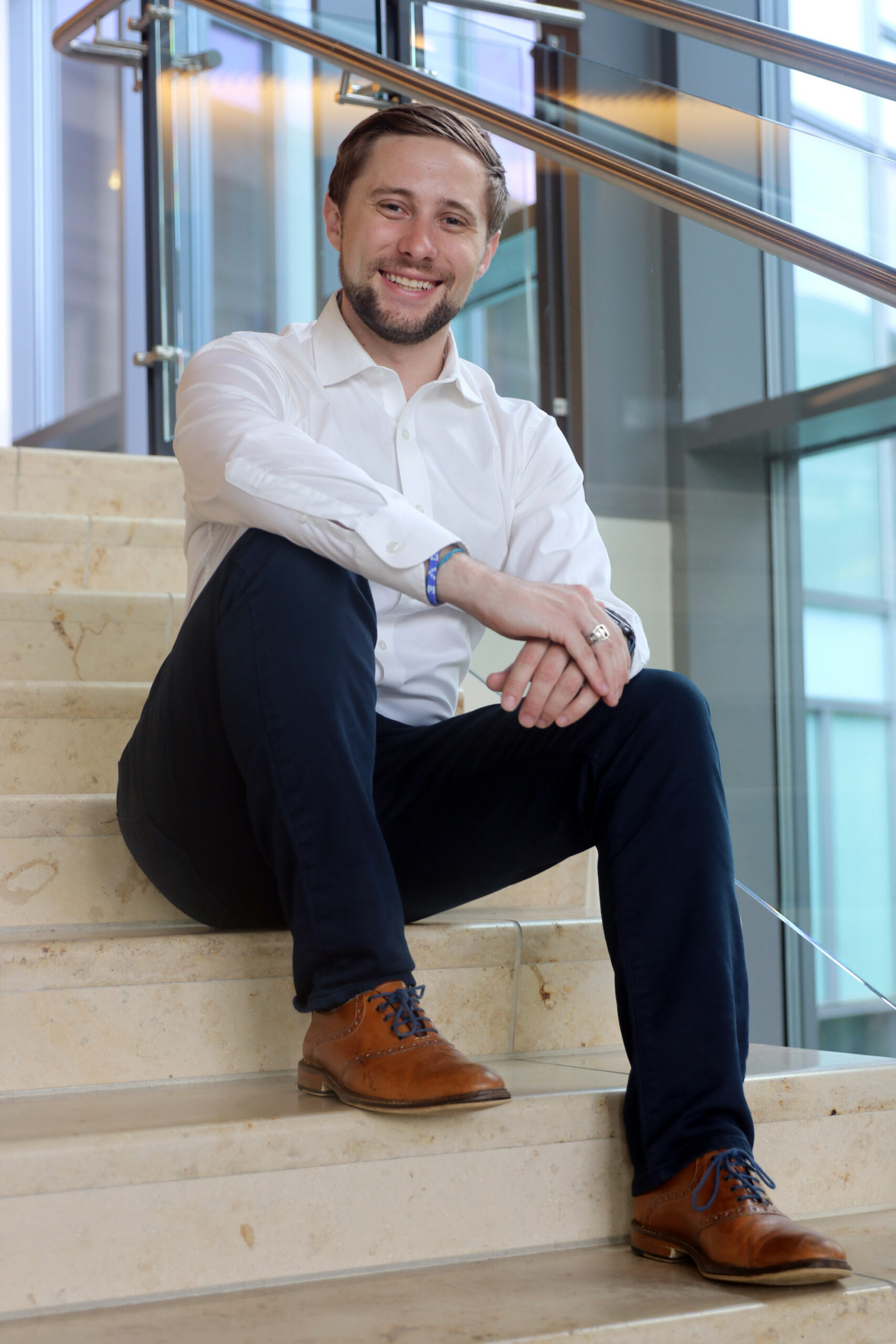
Ben Cutler is a graduate of MIT’s Supply Chain Management Master’s program. Prior to MIT, he spent four and a half years at Accenture in the Data and AI practice, leading analytics programs across industries, including telecommunications and healthcare. He holds a B.S. in Industrial Engineering from Penn State. Post graduation, he is joining GE Vernova’s Supply Chain Development Team as a Supply Chain M&A Leader.